
$25 OFF SERVICE FOR NEW CUSTOMERS!
(954) 405-9043
What Is an Integrated Pest Management Plan?
September 2, 2026
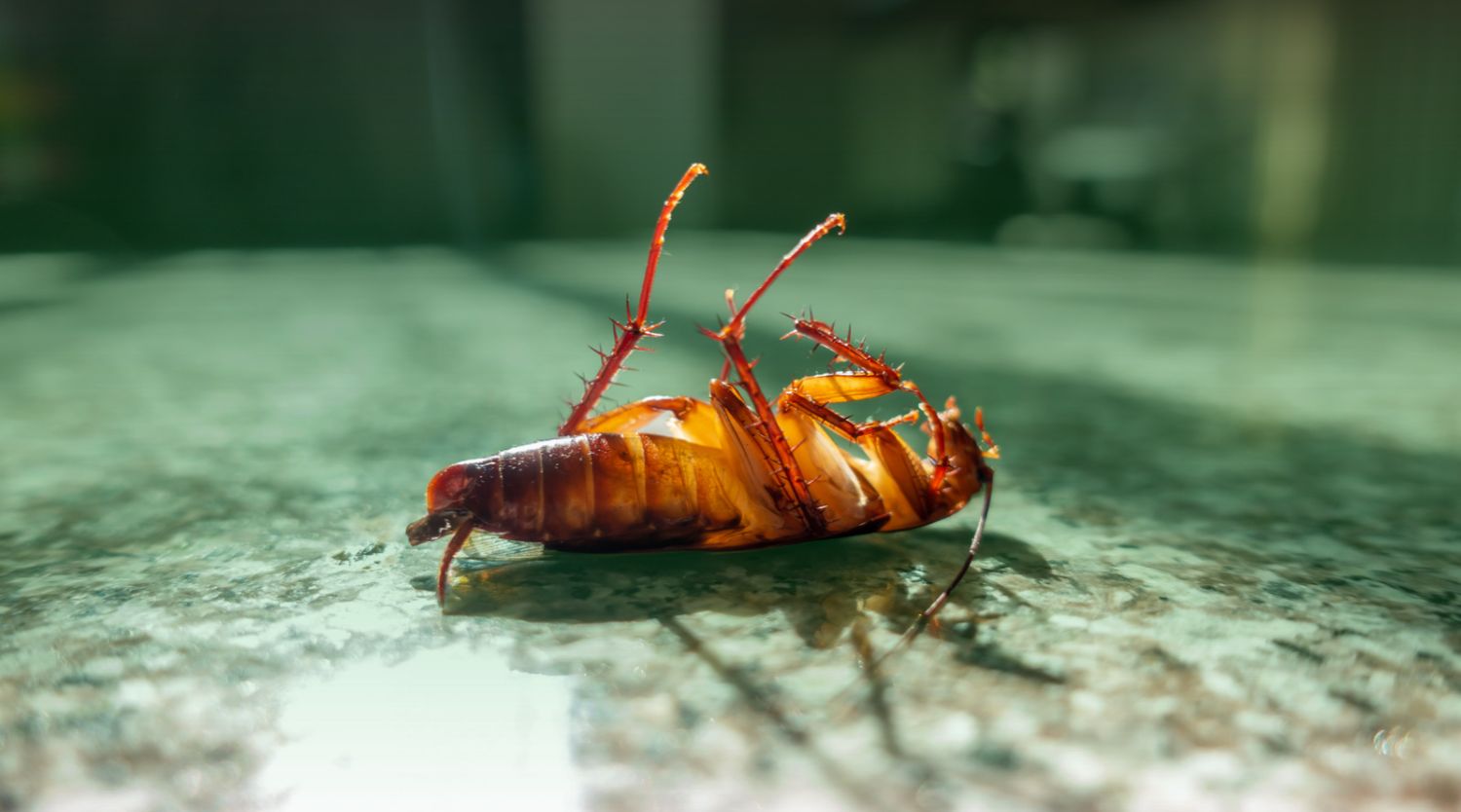
An integrated pest management (IPM) plan is a pest control strategy that treats the cause of an infestation, not just the pests you can see.
Instead of defaulting to a chemical spray, an IPM plan starts with inspection: finding entry points, moisture problems, and food sources, then combining prevention, exclusion, and targeted treatment to solve the problem at its root.
The EPA defines IPM as a series of pest management evaluations, decisions, and controls, rather than a single method.
IPM and Homeowners
For homeowners, the practical difference is this: a standard pest control visit usually means someone sprays a perimeter on a schedule. An IPM plan means someone inspects your specific property, identifies why pests are getting in, and builds a plan around your home instead of a generic route stop.
The Four Steps Every IPM Plan Follows
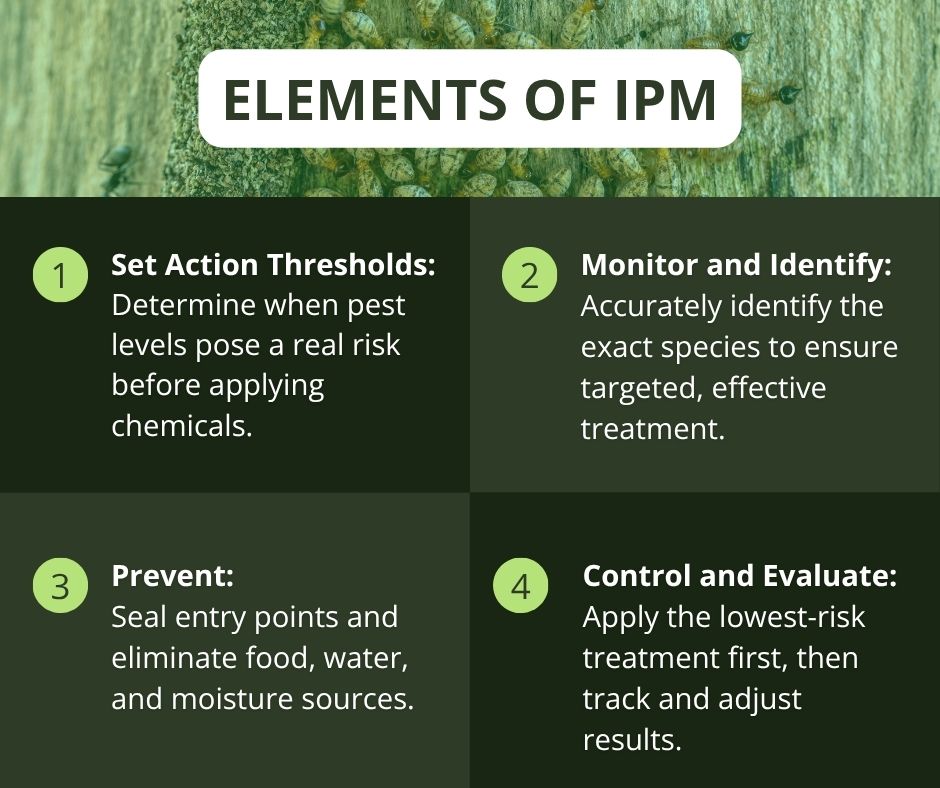
Every credible IPM plan, whether it's used on a farm or in a Pompano Beach kitchen, follows the same four-tiered structure:
Set an action threshold. Not every pest sighting requires treatment. A licensed technician determines the point at which a pest population becomes a real risk to your health or property, so you're not paying for unnecessary chemical applications.
Monitor and identify. Correct identification matters. Ghost ants, rover ants, and Pharaoh ants all respond to different bait strategies, and treating the wrong species can make an infestation worse by scattering the colony.
Prevent. This is where IPM diverges most from traditional pest control. Sealing entry points, correcting moisture issues, and eliminating food and water sources remove the reasons pests came in the first place.
Control, then evaluate. When prevention alone isn't enough, technicians choose the lowest-risk effective option first, such as targeted baiting or mechanical trapping, and document results so the plan can be adjusted over time.
Why IPM Works Especially Well in South Florida
Broward, Palm Beach, and Miami-Dade County homes face a longer pest season than most of the country. Year-round humidity, frequent rain, and warm winters mean ants, roaches, rodents, and termites don't slow down the way they do further north. That combination makes IPM more valuable here, not less:
Moisture control matters more. South Florida's humidity is a primary driver of infestations, from drywood termites to German roaches. An IPM inspection specifically checks for the leaks and standing water that create pest-friendly conditions.
Chemical-light treatment protects families, pets, and waterways. With so many South Florida homes near canals, retention ponds, or the coast, reducing unnecessary pesticide use is both a health and an environmental consideration.
Multi-unit and commercial properties benefit from documentation. HOAs, condo associations, and commercial properties often need a documented pest management plan for insurance or compliance purposes, which an IPM approach naturally produces.
What an IPM Inspection Looks Like at Your Property
When Radix Pest Solutions builds an IPM plan, the process starts with a full interior and exterior inspection, not a quick walk-around. Technicians look for:
Points of entry around utility lines, soffits, doors, and windows
Moisture sources, including AC condensation lines, irrigation overspray, and roof leaks
Sanitation issues that attract pests, such as accessible trash or pet food
Vegetation and mulch touching the structure, which acts as a bridge for ants and other insects
From there, the treatment plan is customized to what was actually found, rather than applied as a standard perimeter spray. That's the core of Integrated Pest Management (IPM) as Radix practices it. We identify the specific conditions at your home or business, then treat accordingly.
IPM vs. Traditional Pest Control
Traditional pest control | Integrated pest management | |
Starting point | Scheduled perimeter spray | Property-specific inspection |
Pesticide use | Routine, broad application | Targeted, used when thresholds are met |
Root cause | Not typically addressed | Entry points and moisture addressed directly |
Best fit | Light, established pest pressure | Recurring infestations, sensitive sites (schools, HOAs, homes with pets/kids) |
Neither approach is "wrong," but IPM tends to produce more durable results for properties that keep seeing the same pest problem come back.

Related Questions to Explore
Is integrated pest management more expensive than regular pest control? Not necessarily. Because IPM targets the actual cause of an infestation, many homeowners see fewer repeat visits over time, which can offset a higher-touch initial inspection.
Does IPM mean no pesticides are used at all? No. IPM doesn't eliminate pesticides; it uses them selectively, after monitoring shows they're necessary, and favors the least-toxic effective option first.
How often should an IPM plan be reassessed? Most residential IPM plans are reviewed each service visit, with a fuller reassessment at least once a year or after any major pest event, since South Florida's conditions change with the seasons.
Can IPM be used for commercial properties and HOAs? Yes. Commercial kitchens, condo associations, and multifamily properties often benefit most from IPM because it produces the kind of documented, defensible pest management history that insurers and health inspectors look for.
When to Call a Professional
DIY sealing and sanitation steps help, but a few signs mean it's time to bring in a licensed pest control company rather than continue managing it yourself:
You've treated the same pest problem more than twice without lasting results
You're seeing pest activity in multiple rooms or both indoors and outdoors
The property is a rental, HOA, or commercial site that needs documented treatment records
You suspect termites, which require specialized, non-DIY treatment
Conclusion
An integrated pest management plan trades one-size-fits-all spraying for a plan built around what's actually happening at your property, which matters even more in a climate like South Florida's.
If you're dealing with pests that keep coming back despite regular treatment, an IPM-based inspection is usually the faster path to a lasting fix.
Ready for a pest management plan built around your property? Contact Radix Pest Solutions for a free consultation.
An integrated pest management (IPM) plan is a pest control strategy that treats the cause of an infestation, not just the pests you can see.
Instead of defaulting to a chemical spray, an IPM plan starts with inspection: finding entry points, moisture problems, and food sources, then combining prevention, exclusion, and targeted treatment to solve the problem at its root.
The EPA defines IPM as a series of pest management evaluations, decisions, and controls, rather than a single method.
IPM and Homeowners
For homeowners, the practical difference is this: a standard pest control visit usually means someone sprays a perimeter on a schedule. An IPM plan means someone inspects your specific property, identifies why pests are getting in, and builds a plan around your home instead of a generic route stop.
The Four Steps Every IPM Plan Follows
Every credible IPM plan, whether it's used on a farm or in a Pompano Beach kitchen, follows the same four-tiered structure:
Set an action threshold. Not every pest sighting requires treatment. A licensed technician determines the point at which a pest population becomes a real risk to your health or property, so you're not paying for unnecessary chemical applications.
Monitor and identify. Correct identification matters. Ghost ants, rover ants, and Pharaoh ants all respond to different bait strategies, and treating the wrong species can make an infestation worse by scattering the colony.
Prevent. This is where IPM diverges most from traditional pest control. Sealing entry points, correcting moisture issues, and eliminating food and water sources remove the reasons pests came in the first place.
Control, then evaluate. When prevention alone isn't enough, technicians choose the lowest-risk effective option first, such as targeted baiting or mechanical trapping, and document results so the plan can be adjusted over time.
Why IPM Works Especially Well in South Florida
Broward, Palm Beach, and Miami-Dade County homes face a longer pest season than most of the country. Year-round humidity, frequent rain, and warm winters mean ants, roaches, rodents, and termites don't slow down the way they do further north. That combination makes IPM more valuable here, not less:
Moisture control matters more. South Florida's humidity is a primary driver of infestations, from drywood termites to German roaches. An IPM inspection specifically checks for the leaks and standing water that create pest-friendly conditions.
Chemical-light treatment protects families, pets, and waterways. With so many South Florida homes near canals, retention ponds, or the coast, reducing unnecessary pesticide use is both a health and an environmental consideration.
Multi-unit and commercial properties benefit from documentation. HOAs, condo associations, and commercial properties often need a documented pest management plan for insurance or compliance purposes, which an IPM approach naturally produces.
What an IPM Inspection Looks Like at Your Property
When Radix Pest Solutions builds an IPM plan, the process starts with a full interior and exterior inspection, not a quick walk-around. Technicians look for:
Points of entry around utility lines, soffits, doors, and windows
Moisture sources, including AC condensation lines, irrigation overspray, and roof leaks
Sanitation issues that attract pests, such as accessible trash or pet food
Vegetation and mulch touching the structure, which acts as a bridge for ants and other insects
From there, the treatment plan is customized to what was actually found, rather than applied as a standard perimeter spray. That's the core of Integrated Pest Management (IPM) as Radix practices it. We identify the specific conditions at your home or business, then treat accordingly.
IPM vs. Traditional Pest Control
Traditional pest control | Integrated pest management | |
Starting point | Scheduled perimeter spray | Property-specific inspection |
Pesticide use | Routine, broad application | Targeted, used when thresholds are met |
Root cause | Not typically addressed | Entry points and moisture addressed directly |
Best fit | Light, established pest pressure | Recurring infestations, sensitive sites (schools, HOAs, homes with pets/kids) |
Neither approach is "wrong," but IPM tends to produce more durable results for properties that keep seeing the same pest problem come back.
Related Questions to Explore
Is integrated pest management more expensive than regular pest control? Not necessarily. Because IPM targets the actual cause of an infestation, many homeowners see fewer repeat visits over time, which can offset a higher-touch initial inspection.
Does IPM mean no pesticides are used at all? No. IPM doesn't eliminate pesticides; it uses them selectively, after monitoring shows they're necessary, and favors the least-toxic effective option first.
How often should an IPM plan be reassessed? Most residential IPM plans are reviewed each service visit, with a fuller reassessment at least once a year or after any major pest event, since South Florida's conditions change with the seasons.
Can IPM be used for commercial properties and HOAs? Yes. Commercial kitchens, condo associations, and multifamily properties often benefit most from IPM because it produces the kind of documented, defensible pest management history that insurers and health inspectors look for.
When to Call a Professional
DIY sealing and sanitation steps help, but a few signs mean it's time to bring in a licensed pest control company rather than continue managing it yourself:
You've treated the same pest problem more than twice without lasting results
You're seeing pest activity in multiple rooms or both indoors and outdoors
The property is a rental, HOA, or commercial site that needs documented treatment records
You suspect termites, which require specialized, non-DIY treatment
Conclusion
An integrated pest management plan trades one-size-fits-all spraying for a plan built around what's actually happening at your property, which matters even more in a climate like South Florida's.
If you're dealing with pests that keep coming back despite regular treatment, an IPM-based inspection is usually the faster path to a lasting fix.
Ready for a pest management plan built around your property? Contact Radix Pest Solutions for a free consultation.
Discover Our Latest Blog Post
Stay informed with the latest tips, insights, and updates from Radix Pest Solutions.


We offer a range of professional pest control services to residential and commercial clients. Our experienced team is dedicated to keeping your property pest-free with minimal disruption to your daily life.
Phone:
E-mail:
Locations:
1940 NW 1st Ave
Pompano Beach, FL 33060
2131 Hollywood Blvd, Ste 306
Hollywood, FL 33020
2829 SW 67th Ave
Miami, FL 33155
Hours
Monday - Saturday
07:00 am – 05:00 pm
Sun Closed
*Closed All Major Holidays*
Our Services
We offer a range of professional pest control services to residential and commercial clients. Our experienced team is dedicated to keeping your property pest-free with minimal disruption to your daily life.
Phone:
E-mail:
Locations:
1940 NW 1st Ave
Pompano Beach, FL 33060
2131 Hollywood Blvd, Ste 306
Hollywood, FL 33020
2829 SW 67th Ave
Miami, FL 33155
Hours
Monday - Saturday
07:00 am – 05:00 pm
Sun Closed
*Closed All Major Holidays*
Our Services
We offer a range of professional pest control services to residential and commercial clients. Our experienced team is dedicated to keeping your property pest-free with minimal disruption to your daily life.
Phone:
E-mail:
Locations:
1940 NW 1st Ave
Pompano Beach, FL 33060
2131 Hollywood Blvd, Ste 306
Hollywood, FL 33020
2829 SW 67th Ave
Miami, FL 33155
Hours
Monday - Saturday
07:00 am – 05:00 pm
Sun Closed
*Closed All Major Holidays*
Our Services
We offer a range of professional pest control services to residential and commercial clients. Our experienced team is dedicated to keeping your property pest-free with minimal disruption to your daily life.
Phone:
E-mail:
Locations:
1940 NW 1st Ave
Pompano Beach, FL 33060
2131 Hollywood Blvd, Ste 306
Hollywood, FL 33020
2829 SW 67th Ave
Miami, FL 33155
Hours
Monday - Saturday
07:00 am – 05:00 pm
Sun Closed
*Closed All Major Holidays*
Our Services