$25 OFF SERVICE FOR NEW CUSTOMERS!
(954) 405-9043

Wildlife in Florida: What FL Homeowners Should Know
September 25, 2026

Wildlife in Florida includes more than 700 kinds of land animals, and plenty of them live right next to South Florida homes. Raccoons, opossums, iguanas, snakes, bats, and even coyotes show up in Broward, Palm Beach, and Miami-Dade neighborhoods. Most are harmless visitors. A few damage property, carry disease, or are protected by state rules that catch homeowners off guard.
At Radix Pest Solutions, we get wildlife calls from Pompano Beach to Miami every week. This guide covers the animals you're most likely to see, which ones cause real trouble, what Florida law allows, and when it's time to call for help.
Quick answer: Seeing wildlife in your yard is normal in Florida. An animal becomes a legal "nuisance" when it damages property, threatens safety, or moves into or under your home. Even then, some species have strict rules on how and when they can be removed.
What Counts as Nuisance Wildlife in Florida?
Nuisance wildlife is any wild animal that causes property damage (or is about to), creates a safety threat, or becomes a problem in, under, or on a building. That definition comes from the Florida Fish and Wildlife Conservation Commission (FWC), the state agency that sets the rules for handling wild animals.
The key word is behavior, not species. A raccoon crossing your lawn at night isn't a nuisance. A raccoon tearing into your soffit is. FWC also asks homeowners to treat trapping and removal as a last resort, after steps like securing trash and sealing entry points have failed.
That's good news for most homeowners. The majority of wildlife problems start with something the animal finds on your property, like food, water, or a dry place to sleep. Take that away and many animals move on without any trapping at all.
Common Wildlife Around South Florida Homes
South Florida's warm weather means wildlife stays active all year. There's no real winter slowdown the way there is up north.
Here are the animals Radix technicians run into most often around homes and businesses:
Animal | Where you'll usually find it | Main concern | Native or invasive? |
Raccoons | Attics, chimneys, trash cans, fruit trees | Attic damage, rabies, roundworm | Native |
Under decks, sheds, and crawlspaces | Denning, fleas, and ticks | Native | |
Armadillos | Lawns and flower beds near canals or wooded lots | Digging, burrows under slabs | Nonnative |
Green iguanas | Seawalls, docks, pool decks, landscaping | Burrows, droppings, Salmonella | Invasive |
Snakes | Yards, garages, shrubs, pool equipment | Bites (only a few species are venomous) | Mostly native |
Bats | Roof tiles, eaves, attics | Guano buildup, rabies exposure | Native and protected |
Cane toads | Patios, pool decks, and lawns at night | Toxic to dogs and cats | Invasive |
Squirrels and roof rats | Palm trees, fruit trees, attics | Chewed wiring, attic nesting | Native (squirrels) / nonnative (roof rats) |
Golf course edges, parks, canal banks | Small pets left outside | Established statewide | |
Muscovy ducks | Lakes, canals, pools | Droppings, aggressive feeding behavior | Nonnative |
Raccoons
Raccoons are the most common wildlife nuisance in Florida. They're strong, smart, and happy to pry open a weak roof vent to reach a warm attic. Heavy footsteps overhead at night and a strong odor from a latrine site are the classic signs.
Opossums
Opossums often get mistaken for giant rats. They're usually less destructive than raccoons, but they will move under a deck or shed and bring fleas and ticks with them. They rarely carry rabies, which is one piece of good news.
Armadillos
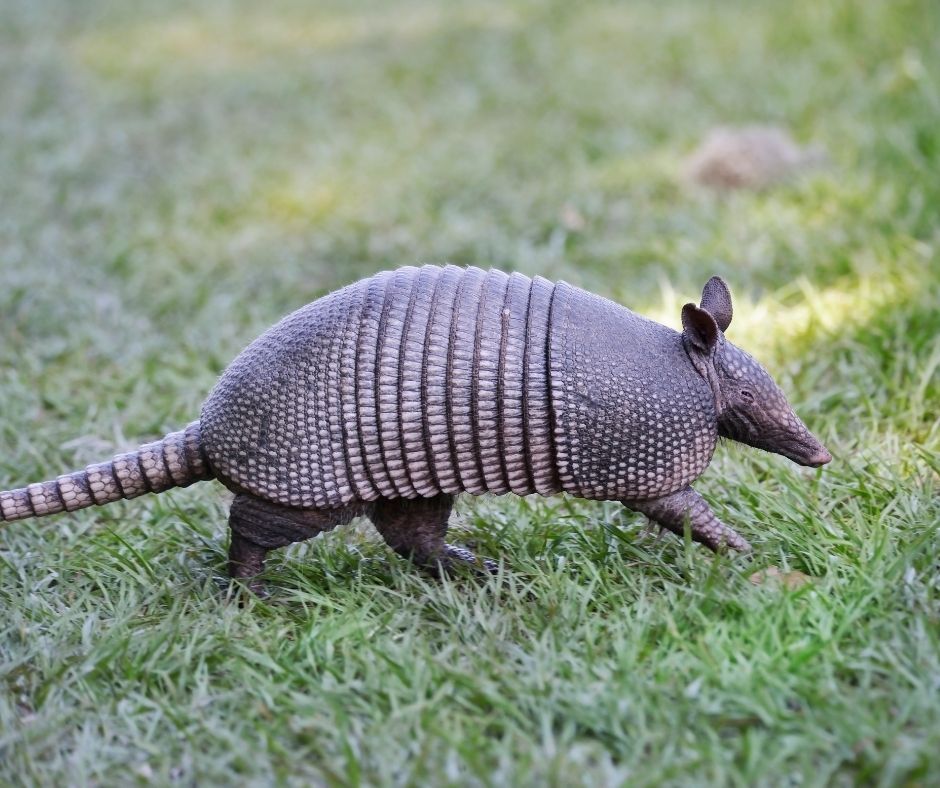
Armadillos dig. If you wake up to small, cone-shaped holes across your lawn or flower beds, an armadillo was likely hunting for grubs overnight. Their burrows under patios, driveways, and slabs can cause the bigger problem, since they leave empty space under concrete.
Green Iguanas
Iguanas are a true South Florida problem. These invasive lizards dig burrows into seawalls and canal banks, eat landscaping, and leave droppings on docks and pool decks. Their droppings can spread Salmonella. Because they aren't native, the rules for removing them are different from those for raccoons or opossums.
Snakes
Florida has dozens of snake species, and only six are venomous. Most snakes near homes are harmless and eat rodents, frogs, and insects. Still, it's hard for most people to tell species apart quickly. If you're unsure, give any snake space.
Bats
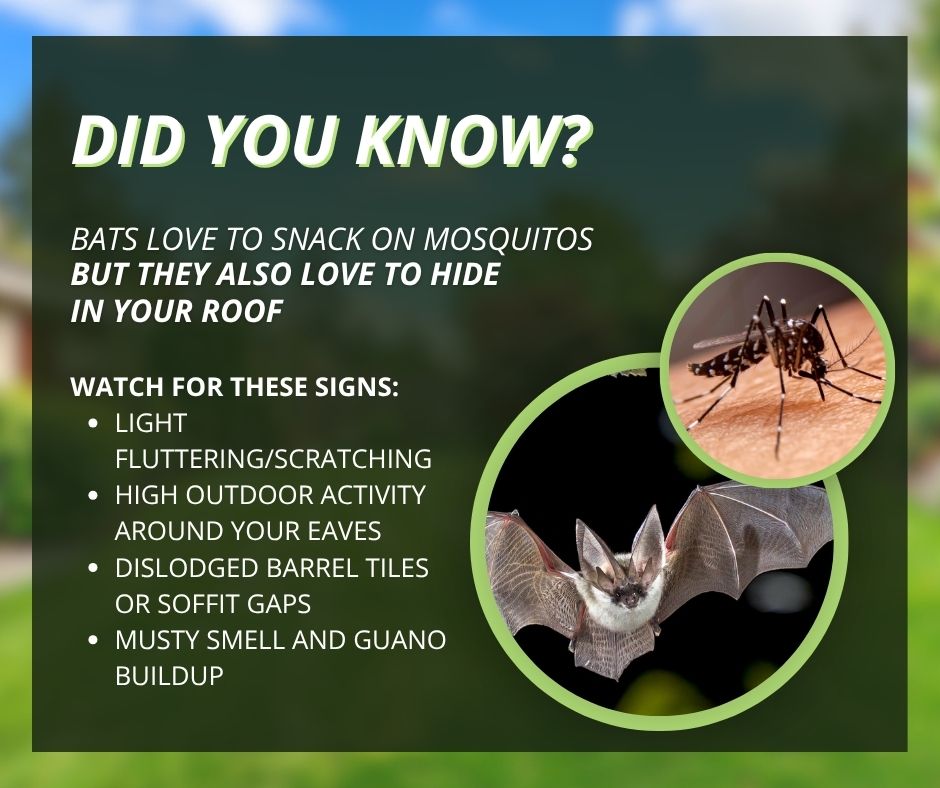
Florida is home to 13 native bat species, and all of them are protected. Bats eat huge numbers of mosquitoes, which makes them great neighbors until they move into your roof. A colony tucked under barrel tiles or behind a loose soffit can leave piles of guano and a musty smell.
Bats also sound different from larger animals: a light fluttering or scratching rather than heavy footsteps.
Cane Toads
Cane toads (also called bufo toads) are one of the most dangerous animals for South Florida pets. They release a toxin from glands behind their heads, and a dog that licks or bites one can get seriously sick within minutes. They show up most during the rainy season, especially around pool decks, patio lights, and outdoor pet bowls.
Squirrels and Roof Rats
Squirrels and roof rats both climb palm trees and fruit trees to reach rooflines. Once inside, they chew wiring, shred insulation, and nest in attic corners. Squirrels are active during the day, while roof rats move at night.
Not sure what you're dealing with? For roof rats and mice, see our rodent control service.
Coyotes and Muscovy Ducks
Coyotes now live throughout Florida, including urban parts of Broward and Miami-Dade. They generally avoid people, but small dogs and outdoor cats are at risk, especially at dawn and dusk.
Muscovy ducks are a different kind of nuisance. They're nonnative, they gather wherever people feed them, and their droppings can foul pool decks and walkways quickly.
Florida Wildlife Laws Every Homeowner Should Know
Florida lets property owners deal with most nuisance wildlife on their own land, but the rules on how are strict. Getting them wrong can mean fines or harm to animals that didn't need to be harmed. Here are the rules that come up most often:
You can remove most nuisance wildlife from your own property. You can also hire someone to do it for you. Most species don't require an FWC permit.
Captured animals must be handled within 24 hours. FWC requires live-trapped nuisance wildlife to be released legally or humanely euthanized within 24 hours of capture. Where you release an animal is restricted, so driving it to a park or empty lot isn't an option.
Bats can only be excluded from August 15 through April 15. Bat maternity season runs from April 16 to August 14. During that window, it's illegal to block bats from their roost without a permit, since flightless pups would be trapped inside. FWC's bat guidelines require one-way exclusion devices left in place for at least four nights, with overnight temperatures of 50°F or higher. As of late September, the legal exclusion window is open.
Some animals are FWC's job, not yours. Alligators 4 feet or longer that pose a threat should be reported to FWC's Statewide Nuisance Alligator Program. Never try to move an alligator yourself.
Iguanas and cane toads have fewer protections. Both are invasive, and FWC encourages removal from private property with the landowner's permission. They are still covered by Florida's animal cruelty laws, so removal has to be humane.
Poisons and mothballs aren't legal wildlife repellents. Using a pesticide in any way its label doesn't allow is against the law, and it puts pets, kids, and non-target wildlife at risk.
This is the part homeowners most often get wrong. The instinct is to trap an animal and relocate it somewhere "nicer." In Florida, the release rules are exactly where DIY removal runs into legal trouble.
Health and Property Risks From Florida Wildlife
Wildlife around your home creates two kinds of risk: health risks for your family and pets, and physical damage to your property.
Here's how they break down:
Risk | Animals most often involved | What to watch for |
Rabies | Raccoons, bats, foxes | An animal out in daylight acting confused, wobbly, or unusually bold |
Raccoons | Latrine sites in attics, on roofs, or near woodpiles | |
Salmonella | Iguanas, turtles | Droppings on docks, pool decks, and patios |
Pet poisoning | Cane toads | A dog drooling, pawing at its mouth, or stumbling after being outside |
Structural damage | Raccoons, iguanas, armadillos | Torn soffits, collapsing seawall soil, holes under slabs |
Fire risk | Roof rats, squirrels | Chewed wiring in the attic or garage |
If a bat is ever found in a room where someone was sleeping, or if anyone is bitten or scratched by a wild animal, contact a doctor and your county health department right away. Don't wait to see if symptoms show up.
How to Keep Wildlife Away From Your Home
The best way to prevent wildlife problems is to remove the food, water, and shelter that draw animals in. Most South Florida wildlife issues can be avoided with a few habits:
Lock down trash. Use cans with clamping or locking lids, and don't put bags out the night before pickup.
Bring pet food and water bowls inside at night. This matters twice in Florida, since outdoor bowls attract both raccoons and cane toads.
Pick up fallen fruit. Mango, avocado, and citrus trees are a buffet for raccoons, opossums, and roof rats.
Trim tree limbs away from the roof. Branches and palm fronds touching the roofline give climbers an easy path up.
Seal the house. Repair loose soffits, screen roof and gable vents, cap chimneys, and close gaps around pipes and utility lines.
Block off the underside of decks and sheds. Skirting or buried hardware cloth keeps opossums and armadillos from moving in.
Don't feed wildlife, including ducks. Feeding teaches animals that your property is a reliable food source.
Check the yard before letting pets out after dark. A quick walk with a flashlight can prevent a cane toad or coyote encounter.
Prevention works best as part of a regular plan. Our residential pest control service includes inspections that spot entry points before animals find them.
Related Questions to Explore
What animals are considered nuisance wildlife in Florida? Any wild animal that damages property, threatens safety, or causes problems in or under a building can qualify. Around South Florida homes, raccoons, iguanas, opossums, armadillos, bats, and roof rats are the most common.
Is it legal to trap animals on my own property in Florida? Yes, for most nuisance species, and you usually don't need a permit. Live-trapped animals must be released legally or humanely euthanized within 24 hours, and relocation is restricted.
Who do I call about an alligator in my yard? For an alligator 4 feet or longer that you believe is a threat, call FWC's nuisance alligator hotline at 866-392-4286. Keep pets and kids away until it's handled.
Are iguanas protected in Florida? No. Green iguanas are invasive and can be removed from private property with the owner's permission, as long as it's done humanely. See our iguana removal service for help.
When can bats be removed from a house in Florida? Only between August 15 and April 15, using one-way exclusion devices. Removal during maternity season (April 16 to August 14) requires a permit.
What should I do if my dog licks a cane toad? Wipe your dog's gums and rinse its mouth with water, pointing the flow out of the mouth rather than down the throat. Then call your vet or an emergency animal hospital right away.
When to Call a Professional
Some wildlife situations are fine to handle yourself, like securing trash or picking up fruit. Others are safer and more legal to hand off to a licensed team. Call a professional if:
You hear animals in your attic, walls, or crawlspace, especially at night
You've found droppings, a latrine site, or a strong, lingering odor
You suspect bats and need an exclusion done legally and within the allowed dates
Iguanas are burrowing into your seawall, foundation, or landscaping
You're not sure what animal you're dealing with or what Florida law allows
Radix serves homes and businesses across Broward, Palm Beach, and Miami-Dade from our Pompano Beach, Hollywood, and Miami locations.
Conclusion
Wildlife in Florida is part of the deal when you live in the Sunshine State, and most encounters are harmless. Problems start when animals find food, water, or shelter at your home.
Remove what attracts wildlife: trash, pet food, fallen fruit, and open entry points.
Know the rules before trapping, especially for bats and relocation.
Get help when an animal has moved in, not just passed through.
Seeing signs of wildlife in or around your home? Contact Radix Pest Solutions today!
Wildlife in Florida includes more than 700 kinds of land animals, and plenty of them live right next to South Florida homes. Raccoons, opossums, iguanas, snakes, bats, and even coyotes show up in Broward, Palm Beach, and Miami-Dade neighborhoods. Most are harmless visitors. A few damage property, carry disease, or are protected by state rules that catch homeowners off guard.
At Radix Pest Solutions, we get wildlife calls from Pompano Beach to Miami every week. This guide covers the animals you're most likely to see, which ones cause real trouble, what Florida law allows, and when it's time to call for help.
Quick answer: Seeing wildlife in your yard is normal in Florida. An animal becomes a legal "nuisance" when it damages property, threatens safety, or moves into or under your home. Even then, some species have strict rules on how and when they can be removed.
What Counts as Nuisance Wildlife in Florida?
Nuisance wildlife is any wild animal that causes property damage (or is about to), creates a safety threat, or becomes a problem in, under, or on a building. That definition comes from the Florida Fish and Wildlife Conservation Commission (FWC), the state agency that sets the rules for handling wild animals.
The key word is behavior, not species. A raccoon crossing your lawn at night isn't a nuisance. A raccoon tearing into your soffit is. FWC also asks homeowners to treat trapping and removal as a last resort, after steps like securing trash and sealing entry points have failed.
That's good news for most homeowners. The majority of wildlife problems start with something the animal finds on your property, like food, water, or a dry place to sleep. Take that away and many animals move on without any trapping at all.
Common Wildlife Around South Florida Homes
South Florida's warm weather means wildlife stays active all year. There's no real winter slowdown the way there is up north.
Here are the animals Radix technicians run into most often around homes and businesses:
Animal | Where you'll usually find it | Main concern | Native or invasive? |
Raccoons | Attics, chimneys, trash cans, fruit trees | Attic damage, rabies, roundworm | Native |
Under decks, sheds, and crawlspaces | Denning, fleas, and ticks | Native | |
Armadillos | Lawns and flower beds near canals or wooded lots | Digging, burrows under slabs | Nonnative |
Green iguanas | Seawalls, docks, pool decks, landscaping | Burrows, droppings, Salmonella | Invasive |
Snakes | Yards, garages, shrubs, pool equipment | Bites (only a few species are venomous) | Mostly native |
Bats | Roof tiles, eaves, attics | Guano buildup, rabies exposure | Native and protected |
Cane toads | Patios, pool decks, and lawns at night | Toxic to dogs and cats | Invasive |
Squirrels and roof rats | Palm trees, fruit trees, attics | Chewed wiring, attic nesting | Native (squirrels) / nonnative (roof rats) |
Golf course edges, parks, canal banks | Small pets left outside | Established statewide | |
Muscovy ducks | Lakes, canals, pools | Droppings, aggressive feeding behavior | Nonnative |
Raccoons
Raccoons are the most common wildlife nuisance in Florida. They're strong, smart, and happy to pry open a weak roof vent to reach a warm attic. Heavy footsteps overhead at night and a strong odor from a latrine site are the classic signs.
Opossums
Opossums often get mistaken for giant rats. They're usually less destructive than raccoons, but they will move under a deck or shed and bring fleas and ticks with them. They rarely carry rabies, which is one piece of good news.
Armadillos
Armadillos dig. If you wake up to small, cone-shaped holes across your lawn or flower beds, an armadillo was likely hunting for grubs overnight. Their burrows under patios, driveways, and slabs can cause the bigger problem, since they leave empty space under concrete.
Green Iguanas
Iguanas are a true South Florida problem. These invasive lizards dig burrows into seawalls and canal banks, eat landscaping, and leave droppings on docks and pool decks. Their droppings can spread Salmonella. Because they aren't native, the rules for removing them are different from those for raccoons or opossums.
Snakes
Florida has dozens of snake species, and only six are venomous. Most snakes near homes are harmless and eat rodents, frogs, and insects. Still, it's hard for most people to tell species apart quickly. If you're unsure, give any snake space.
Bats
Florida is home to 13 native bat species, and all of them are protected. Bats eat huge numbers of mosquitoes, which makes them great neighbors until they move into your roof. A colony tucked under barrel tiles or behind a loose soffit can leave piles of guano and a musty smell.
Bats also sound different from larger animals: a light fluttering or scratching rather than heavy footsteps.
Cane Toads
Cane toads (also called bufo toads) are one of the most dangerous animals for South Florida pets. They release a toxin from glands behind their heads, and a dog that licks or bites one can get seriously sick within minutes. They show up most during the rainy season, especially around pool decks, patio lights, and outdoor pet bowls.
Squirrels and Roof Rats
Squirrels and roof rats both climb palm trees and fruit trees to reach rooflines. Once inside, they chew wiring, shred insulation, and nest in attic corners. Squirrels are active during the day, while roof rats move at night.
Not sure what you're dealing with? For roof rats and mice, see our rodent control service.
Coyotes and Muscovy Ducks
Coyotes now live throughout Florida, including urban parts of Broward and Miami-Dade. They generally avoid people, but small dogs and outdoor cats are at risk, especially at dawn and dusk.
Muscovy ducks are a different kind of nuisance. They're nonnative, they gather wherever people feed them, and their droppings can foul pool decks and walkways quickly.
Florida Wildlife Laws Every Homeowner Should Know
Florida lets property owners deal with most nuisance wildlife on their own land, but the rules on how are strict. Getting them wrong can mean fines or harm to animals that didn't need to be harmed. Here are the rules that come up most often:
You can remove most nuisance wildlife from your own property. You can also hire someone to do it for you. Most species don't require an FWC permit.
Captured animals must be handled within 24 hours. FWC requires live-trapped nuisance wildlife to be released legally or humanely euthanized within 24 hours of capture. Where you release an animal is restricted, so driving it to a park or empty lot isn't an option.
Bats can only be excluded from August 15 through April 15. Bat maternity season runs from April 16 to August 14. During that window, it's illegal to block bats from their roost without a permit, since flightless pups would be trapped inside. FWC's bat guidelines require one-way exclusion devices left in place for at least four nights, with overnight temperatures of 50°F or higher. As of late September, the legal exclusion window is open.
Some animals are FWC's job, not yours. Alligators 4 feet or longer that pose a threat should be reported to FWC's Statewide Nuisance Alligator Program. Never try to move an alligator yourself.
Iguanas and cane toads have fewer protections. Both are invasive, and FWC encourages removal from private property with the landowner's permission. They are still covered by Florida's animal cruelty laws, so removal has to be humane.
Poisons and mothballs aren't legal wildlife repellents. Using a pesticide in any way its label doesn't allow is against the law, and it puts pets, kids, and non-target wildlife at risk.
This is the part homeowners most often get wrong. The instinct is to trap an animal and relocate it somewhere "nicer." In Florida, the release rules are exactly where DIY removal runs into legal trouble.
Health and Property Risks From Florida Wildlife
Wildlife around your home creates two kinds of risk: health risks for your family and pets, and physical damage to your property.
Here's how they break down:
Risk | Animals most often involved | What to watch for |
Rabies | Raccoons, bats, foxes | An animal out in daylight acting confused, wobbly, or unusually bold |
Raccoons | Latrine sites in attics, on roofs, or near woodpiles | |
Salmonella | Iguanas, turtles | Droppings on docks, pool decks, and patios |
Pet poisoning | Cane toads | A dog drooling, pawing at its mouth, or stumbling after being outside |
Structural damage | Raccoons, iguanas, armadillos | Torn soffits, collapsing seawall soil, holes under slabs |
Fire risk | Roof rats, squirrels | Chewed wiring in the attic or garage |
If a bat is ever found in a room where someone was sleeping, or if anyone is bitten or scratched by a wild animal, contact a doctor and your county health department right away. Don't wait to see if symptoms show up.
How to Keep Wildlife Away From Your Home
The best way to prevent wildlife problems is to remove the food, water, and shelter that draw animals in. Most South Florida wildlife issues can be avoided with a few habits:
Lock down trash. Use cans with clamping or locking lids, and don't put bags out the night before pickup.
Bring pet food and water bowls inside at night. This matters twice in Florida, since outdoor bowls attract both raccoons and cane toads.
Pick up fallen fruit. Mango, avocado, and citrus trees are a buffet for raccoons, opossums, and roof rats.
Trim tree limbs away from the roof. Branches and palm fronds touching the roofline give climbers an easy path up.
Seal the house. Repair loose soffits, screen roof and gable vents, cap chimneys, and close gaps around pipes and utility lines.
Block off the underside of decks and sheds. Skirting or buried hardware cloth keeps opossums and armadillos from moving in.
Don't feed wildlife, including ducks. Feeding teaches animals that your property is a reliable food source.
Check the yard before letting pets out after dark. A quick walk with a flashlight can prevent a cane toad or coyote encounter.
Prevention works best as part of a regular plan. Our residential pest control service includes inspections that spot entry points before animals find them.
Related Questions to Explore
What animals are considered nuisance wildlife in Florida? Any wild animal that damages property, threatens safety, or causes problems in or under a building can qualify. Around South Florida homes, raccoons, iguanas, opossums, armadillos, bats, and roof rats are the most common.
Is it legal to trap animals on my own property in Florida? Yes, for most nuisance species, and you usually don't need a permit. Live-trapped animals must be released legally or humanely euthanized within 24 hours, and relocation is restricted.
Who do I call about an alligator in my yard? For an alligator 4 feet or longer that you believe is a threat, call FWC's nuisance alligator hotline at 866-392-4286. Keep pets and kids away until it's handled.
Are iguanas protected in Florida? No. Green iguanas are invasive and can be removed from private property with the owner's permission, as long as it's done humanely. See our iguana removal service for help.
When can bats be removed from a house in Florida? Only between August 15 and April 15, using one-way exclusion devices. Removal during maternity season (April 16 to August 14) requires a permit.
What should I do if my dog licks a cane toad? Wipe your dog's gums and rinse its mouth with water, pointing the flow out of the mouth rather than down the throat. Then call your vet or an emergency animal hospital right away.
When to Call a Professional
Some wildlife situations are fine to handle yourself, like securing trash or picking up fruit. Others are safer and more legal to hand off to a licensed team. Call a professional if:
You hear animals in your attic, walls, or crawlspace, especially at night
You've found droppings, a latrine site, or a strong, lingering odor
You suspect bats and need an exclusion done legally and within the allowed dates
Iguanas are burrowing into your seawall, foundation, or landscaping
You're not sure what animal you're dealing with or what Florida law allows
Radix serves homes and businesses across Broward, Palm Beach, and Miami-Dade from our Pompano Beach, Hollywood, and Miami locations.
Conclusion
Wildlife in Florida is part of the deal when you live in the Sunshine State, and most encounters are harmless. Problems start when animals find food, water, or shelter at your home.
Remove what attracts wildlife: trash, pet food, fallen fruit, and open entry points.
Know the rules before trapping, especially for bats and relocation.
Get help when an animal has moved in, not just passed through.
Seeing signs of wildlife in or around your home? Contact Radix Pest Solutions today!
Check Out What Our Pest Free Customers Have To Say

Emerald Tower Association, Inc
Pompano Beach, Florida

Highly recommend them. We had issues with raccoons and Jonathan immediately came out and placed cages around the property. Caught several raccoons. Thank you Jonathan for your excellent service.

Darcy Miller
Pompano Beach, Florida
I would definitely recommend Radix Pest Solutions. Jonathan is very professional, reliable and punctual. He absolutely knows this business and takes pride in his work.

Jason Shervinski
Pompano Beach, Florida
We have had Jonathan as our exterminator for well over 7 years. We could not think of a better Pest Control company for all of properties and needs. Jonathan is prompt, detailed, and reasonable. If you are searching for a quality Pest Control Company as a one time or on a recurring basis you found it in Radix!

Emily Acevedo
Pompano Beach, Florida
Jonathan was very professional and knowledgeable, he listened and then proceeded to address the concerns. He provided excellent service and explained the process, completed it quickly and efficiently. I will be using this company again and recommend to anyone with a pest problem.

Killgates Covidlie
Pompano Beach, Florida
I’ve known Jonathan for over five years. On how he took care of us during a complete termite infestation is no less than perfection. There no one like him, bar none. His honesty, reliability, hard work and dedication and punctuality. I feel privileged that I was lucky enough to have found him to use his service, because they don’t exist like him. Thank you Jonathan.
Daisy Maestre
Pompano Beach, Florida
It’s the best pest control company that I’ve dealt with, Jonathan is knowledgeable, always prompt, courteous and thorough and very affordable. I highly recommend him…. Give him a call you won’t regret it… 😊
Emerald Tower Association, Inc
Pompano Beach, Florida
Highly recommend them. We had issues with raccoons and Jonathan immediately came out and placed cages around the property. Caught several raccoons. Thank you Jonathan for your excellent service.
Darcy Miller
Pompano Beach, Florida
I would definitely recommend Radix Pest Solutions. Jonathan is very professional, reliable and punctual. He absolutely knows this business and takes pride in his work.
Jason Shervinski
Pompano Beach, Florida
We have had Jonathan as our exterminator for well over 7 years. We could not think of a better Pest Control company for all of properties and needs. Jonathan is prompt, detailed, and reasonable. If you are searching for a quality Pest Control Company as a one time or on a recurring basis you found it in Radix!
Emily Acevedo
Pompano Beach, Florida
Jonathan was very professional and knowledgeable, he listened and then proceeded to address the concerns. He provided excellent service and explained the process, completed it quickly and efficiently. I will be using this company again and recommend to anyone with a pest problem.
Killgates Covidlie
Pompano Beach, Florida
I’ve known Jonathan for over five years. On how he took care of us during a complete termite infestation is no less than perfection. There no one like him, bar none. His honesty, reliability, hard work and dedication and punctuality. I feel privileged that I was lucky enough to have found him to use his service, because they don’t exist like him. Thank you Jonathan.
Daisy Maestre
Pompano Beach, Florida
It’s the best pest control company that I’ve dealt with, Jonathan is knowledgeable, always prompt, courteous and thorough and very affordable. I highly recommend him…. Give him a call you won’t regret it… 😊
Emerald Tower Association, Inc
Pompano Beach, Florida
Highly recommend them. We had issues with raccoons and Jonathan immediately came out and placed cages around the property. Caught several raccoons. Thank you Jonathan for your excellent service.
Darcy Miller
Pompano Beach, Florida
I would definitely recommend Radix Pest Solutions. Jonathan is very professional, reliable and punctual. He absolutely knows this business and takes pride in his work.
Jason Shervinski
Pompano Beach, Florida
We have had Jonathan as our exterminator for well over 7 years. We could not think of a better Pest Control company for all of properties and needs. Jonathan is prompt, detailed, and reasonable. If you are searching for a quality Pest Control Company as a one time or on a recurring basis you found it in Radix!
Emily Acevedo
Pompano Beach, Florida
Jonathan was very professional and knowledgeable, he listened and then proceeded to address the concerns. He provided excellent service and explained the process, completed it quickly and efficiently. I will be using this company again and recommend to anyone with a pest problem.
Killgates Covidlie
Pompano Beach, Florida
I’ve known Jonathan for over five years. On how he took care of us during a complete termite infestation is no less than perfection. There no one like him, bar none. His honesty, reliability, hard work and dedication and punctuality. I feel privileged that I was lucky enough to have found him to use his service, because they don’t exist like him. Thank you Jonathan.
Daisy Maestre
Pompano Beach, Florida
It’s the best pest control company that I’ve dealt with, Jonathan is knowledgeable, always prompt, courteous and thorough and very affordable. I highly recommend him…. Give him a call you won’t regret it… 😊
Emerald Tower Association, Inc
Pompano Beach, Florida
Highly recommend them. We had issues with raccoons and Jonathan immediately came out and placed cages around the property. Caught several raccoons. Thank you Jonathan for your excellent service.
Darcy Miller
Pompano Beach, Florida
I would definitely recommend Radix Pest Solutions. Jonathan is very professional, reliable and punctual. He absolutely knows this business and takes pride in his work.
Jason Shervinski
Pompano Beach, Florida
We have had Jonathan as our exterminator for well over 7 years. We could not think of a better Pest Control company for all of properties and needs. Jonathan is prompt, detailed, and reasonable. If you are searching for a quality Pest Control Company as a one time or on a recurring basis you found it in Radix!
Emily Acevedo
Pompano Beach, Florida
Jonathan was very professional and knowledgeable, he listened and then proceeded to address the concerns. He provided excellent service and explained the process, completed it quickly and efficiently. I will be using this company again and recommend to anyone with a pest problem.
Killgates Covidlie
Pompano Beach, Florida
I’ve known Jonathan for over five years. On how he took care of us during a complete termite infestation is no less than perfection. There no one like him, bar none. His honesty, reliability, hard work and dedication and punctuality. I feel privileged that I was lucky enough to have found him to use his service, because they don’t exist like him. Thank you Jonathan.
Daisy Maestre
Pompano Beach, Florida
It’s the best pest control company that I’ve dealt with, Jonathan is knowledgeable, always prompt, courteous and thorough and very affordable. I highly recommend him…. Give him a call you won’t regret it… 😊


We offer a range of professional pest control services to residential and commercial clients. Our experienced team is dedicated to keeping your property pest-free with minimal disruption to your daily life.
Phone:
E-mail:
Locations:
1940 NW 1st Ave
Pompano Beach, FL 33060
2131 Hollywood Blvd, Ste 306
Hollywood, FL 33020
2829 SW 67th Ave
Miami, FL 33155
Hours
Monday - Saturday
07:00 am – 05:00 pm
Sun Closed
*Closed All Major Holidays*
Our Services
We offer a range of professional pest control services to residential and commercial clients. Our experienced team is dedicated to keeping your property pest-free with minimal disruption to your daily life.
Phone:
E-mail:
Locations:
1940 NW 1st Ave
Pompano Beach, FL 33060
2131 Hollywood Blvd, Ste 306
Hollywood, FL 33020
2829 SW 67th Ave
Miami, FL 33155
Hours
Monday - Saturday
07:00 am – 05:00 pm
Sun Closed
*Closed All Major Holidays*
Our Services
We offer a range of professional pest control services to residential and commercial clients. Our experienced team is dedicated to keeping your property pest-free with minimal disruption to your daily life.
Phone:
E-mail:
Locations:
1940 NW 1st Ave
Pompano Beach, FL 33060
2131 Hollywood Blvd, Ste 306
Hollywood, FL 33020
2829 SW 67th Ave
Miami, FL 33155
Hours
Monday - Saturday
07:00 am – 05:00 pm
Sun Closed
*Closed All Major Holidays*
Our Services
We offer a range of professional pest control services to residential and commercial clients. Our experienced team is dedicated to keeping your property pest-free with minimal disruption to your daily life.
Phone:
E-mail:
Locations:
1940 NW 1st Ave
Pompano Beach, FL 33060
2131 Hollywood Blvd, Ste 306
Hollywood, FL 33020
2829 SW 67th Ave
Miami, FL 33155
Hours
Monday - Saturday
07:00 am – 05:00 pm
Sun Closed
*Closed All Major Holidays*
Our Services