
$25 OFF SERVICE FOR NEW CUSTOMERS!
(954) 405-9043
How Often Should a Restaurant Schedule Pest Control?
May 22, 2026

Most Florida restaurants need professional pest control at least once a month. A working kitchen gives pests everything they need: constant food, standing moisture, warmth, and daily foot traffic bringing in new pressure.
One missed treatment cycle can lead to a failed health inspection, a citation from the Florida DBPR, and a reputation hit that takes months to recover from.
This guide covers how often to schedule service, what Florida law requires, which pests to watch for in South Florida, and what a real commercial program looks like.
Why Restaurants Face Bigger Pest Pressure Than Most Businesses
Restaurants sit at the intersection of everything pests want. Food residue builds up in floor drains, behind fryers, and under prep tables faster than most kitchens can keep up with.
Deliveries arrive through the back door several times a week. Every crate and pallet is a potential entry vehicle for cockroaches, rodents, and stored-product beetles.
Pest problems in food service are not just a nuisance. They are a public health issue, and Florida's warm climate shortens the window between a small pest presence and a full infestation.
How South Florida's Climate Makes It Worse
The Broward, Miami-Dade, and Palm Beach area has some of the highest cockroach population density in the country, according to U.S. Department of Housing and Urban Development data on Florida pest pressure.
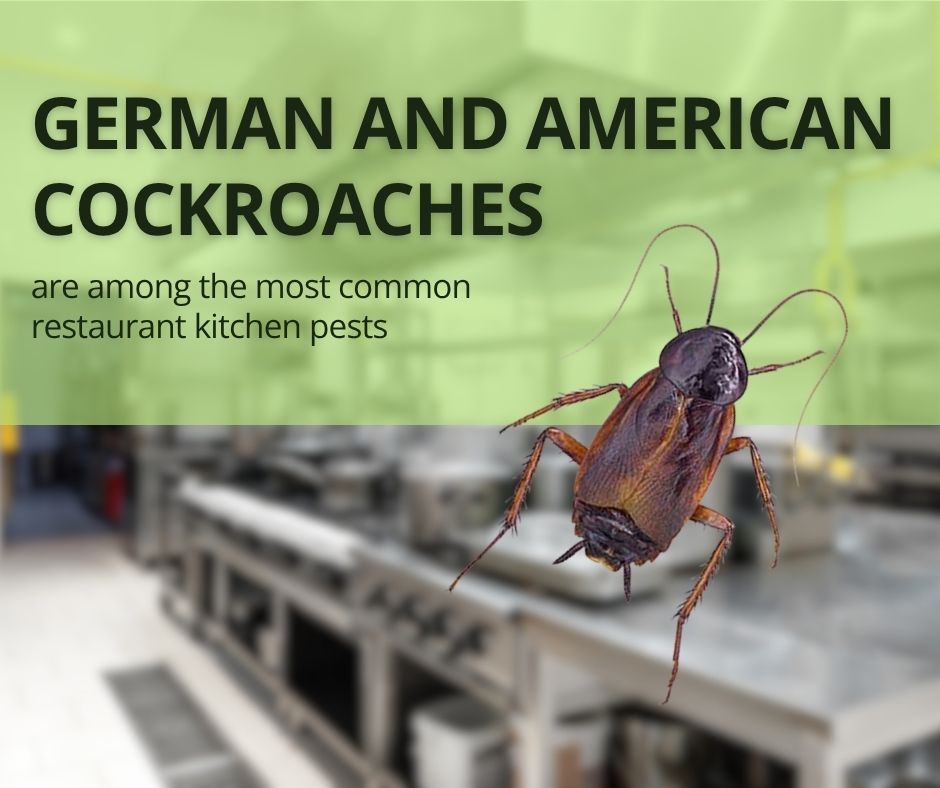
German cockroaches thrive in kitchen humidity. American cockroaches move through floor drains. Fly season peaks between July and September, and rodents follow food delivery routes year-round.
South Florida restaurants operating without a monthly pest program are not ahead of the problem. They are waiting for one.
How Often Should a Restaurant Get Pest Control?
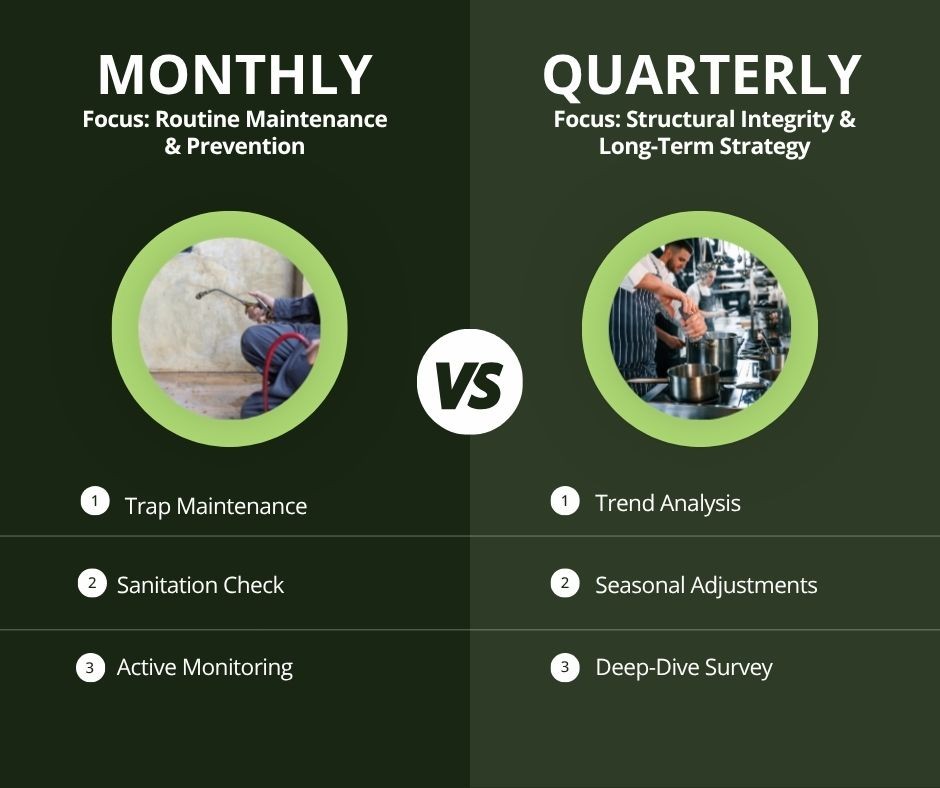
Most active restaurants need monthly professional pest control visits. Some high-volume operations need service every two weeks. The right schedule depends on your kitchen volume, storage conditions, and current pest pressure at your location.
Monthly Service
For most full-service restaurants, fast-casual operations, and cafeterias in South Florida, monthly visits are the baseline.
Monthly service ensures a licensed technician is checking bait stations, inspecting floor drains and grease traps, and treating entry points before any new activity escalates.
It also creates the service log documentation that your DBPR inspector will ask to see.
Quarterly Service
Quarterly visits may be appropriate for smaller operations with limited food storage or very low customer volume.
Even then, regular between-visit monitoring is still needed. Any sign of activity should trigger a call before the next scheduled visit.
What Triggers More Frequent Visits?
Some situations call for service every two weeks or more:
A current infestation is being actively treated
High-volume food delivery several times per week
A kitchen connected to a loading dock, alley, or dumpster pad
A recent failed DBPR inspection cited pest activity
Outdoor dining areas adjacent to landscaping or water features
Florida Restaurant Pest Control Regulations You Need to Know
Florida restaurants operate under some of the stricter food service sanitation rules in the country. Knowing the requirements helps you set the right service frequency from the start.
DBPR Inspections and What Inspectors Look For
The Florida Department of Business and Professional Regulation inspects most licensed restaurants at least twice per year, unannounced.
Inspectors specifically check for rodent droppings, cockroach activity, fly breeding sources, and structural gaps that allow pest entry.
A documented, active pest control program is one of the first things they look for when a pest citation is issued.
The Pest Control Log Requirement
Per Florida's food service sanitation rules under Chapter 64E-11, Florida Administrative Code, food service establishments must maintain pest-free conditions and demonstrate active pest management.
Your pest control provider should supply a written service report after every visit. The log must include the date of service, pesticides used, pests targeted, and any conditions found.
If your current provider does not automatically supply this, it is a gap in your compliance record. At Radix Pest Solutions, service documentation is provided after every commercial visit, so your records are always ready for inspection.
The Most Common Pests Found in Florida Restaurants
South Florida restaurant kitchens deal with a predictable set of pests. Knowing what to watch for helps your staff flag problems between professional visits.
Pest | Where They Hide | Why They're a Problem |
German cockroaches | Near heat sources, behind equipment, under prep tables | Reproduce fast, resist OTC sprays, signal a larger hidden population |
American cockroaches | Floor drains, crawlspaces, and damp utility areas | Move freely through plumbing, and contaminate food surfaces |
Rodents (rats and mice) | Walls, storage areas, and entry gaps as small as a quarter | Contaminate food, chew wiring and packaging, trigger immediate DBPR citations |
House flies and fruit flies | Floor drains, bar mats, standing liquids | Breed rapidly in kitchen moisture; peak pressure July through September |
Ghost ants and Argentine ants | Bar areas, prep surfaces, anywhere with sugar residue | Hard to eliminate without professional treatment due to the large colony size |
Stored-product beetles and moths | Dry storage, flour, grains, spices in original packaging | Often arrive in deliveries; infest entire pantry areas quickly |
What a Professional Restaurant Pest Control Program Includes
A commercial pest program built for a restaurant looks different from a standard residential plan. When reviewing any proposal, here is what a solid program covers:
Interior and exterior inspection at every visit, not just a treatment spray
Floor drain and grease trap monitoring for cockroach and fly breeding activity
Tamper-resistant rodent bait stations at all exterior entry points and back-of-house areas
Fly light traps are maintained and cleaned on a documented schedule
Integrated Pest Management (IPM): an approach that minimizes chemical use inside food prep areas by prioritizing exclusion, sanitation corrections, and targeted treatments
Written service report and pest log provided after every visit
Emergency callback policy: a reputable provider returns within 24 hours if activity is reported between scheduled visits
For a full breakdown of what is covered, visit our commercial pest control services.
Related Questions to Explore
Does Radix Pest Solutions offer restaurant pest control in South Florida? Radix conducts commercial pest control programs and serves food service businesses throughout Broward and surrounding counties.
What commercial pest services does Radix include with a restaurant program? Radix restaurant programs include interior/exterior inspections, rodent stations, fly traps, drain monitoring, and DBPR-compliant logs. Standalone rodent control is available for active infestations.
How does Radix document pest control services for restaurant inspections? After every visit, Radix provides a written service report. This satisfies the DBPR log requirement and keeps your records audit-ready. Contact us to get started.
What is IPM, and does Radix use it for restaurants? IPM prioritizes inspection, exclusion, and targeted treatments over default chemical spraying. It is the preferred standard for food service environments.
Does Radix handle rodent problems for restaurants specifically? Yes. Our rodent control programs include entry-point identification, tamper-resistant bait station installation, and follow-up monitoring for commercial and restaurant accounts throughout South Florida.
When to Call a Professional Pest Control Company
Some situations call for professional help right away. Do not wait for the next scheduled visit if:
You spot a live rodent or rodent droppings anywhere in the kitchen or storage area
A DBPR inspector cites pest activity or issues a warning
You find cockroaches during operating hours (daytime activity usually signals a significant population)
Fly activity is not responding to sanitation corrections
You are opening a new restaurant with no current service record in place
If your restaurant does not yet have a commercial program, that is the first call to make before your next health inspection. Radix Pest Solutions serves restaurants and food service businesses throughout Broward, Miami-Dade, and Palm Beach Counties. Call us for a free commercial consultation.
Conclusion
Florida restaurants face higher pest pressure than almost any other type of business, and the consequences of an infestation go well beyond inconvenience. Here are the key takeaways:
Most South Florida restaurants need monthly professional pest control, not quarterly
Florida law requires documented pest management records, and your provider should supply these after every visit
The most common restaurant pests in this region are German cockroaches, rodents, flies, and ants
A solid program includes inspection, rodent stations, fly lights, IPM principles, and a written service log
Ready to get your restaurant on a schedule? Contact Radix Pest Solutions today!
Most Florida restaurants need professional pest control at least once a month. A working kitchen gives pests everything they need: constant food, standing moisture, warmth, and daily foot traffic bringing in new pressure.
One missed treatment cycle can lead to a failed health inspection, a citation from the Florida DBPR, and a reputation hit that takes months to recover from.
This guide covers how often to schedule service, what Florida law requires, which pests to watch for in South Florida, and what a real commercial program looks like.
Why Restaurants Face Bigger Pest Pressure Than Most Businesses
Restaurants sit at the intersection of everything pests want. Food residue builds up in floor drains, behind fryers, and under prep tables faster than most kitchens can keep up with.
Deliveries arrive through the back door several times a week. Every crate and pallet is a potential entry vehicle for cockroaches, rodents, and stored-product beetles.
Pest problems in food service are not just a nuisance. They are a public health issue, and Florida's warm climate shortens the window between a small pest presence and a full infestation.
How South Florida's Climate Makes It Worse
The Broward, Miami-Dade, and Palm Beach area has some of the highest cockroach population density in the country, according to U.S. Department of Housing and Urban Development data on Florida pest pressure.
German cockroaches thrive in kitchen humidity. American cockroaches move through floor drains. Fly season peaks between July and September, and rodents follow food delivery routes year-round.
South Florida restaurants operating without a monthly pest program are not ahead of the problem. They are waiting for one.
How Often Should a Restaurant Get Pest Control?
Most active restaurants need monthly professional pest control visits. Some high-volume operations need service every two weeks. The right schedule depends on your kitchen volume, storage conditions, and current pest pressure at your location.
Monthly Service
For most full-service restaurants, fast-casual operations, and cafeterias in South Florida, monthly visits are the baseline.
Monthly service ensures a licensed technician is checking bait stations, inspecting floor drains and grease traps, and treating entry points before any new activity escalates.
It also creates the service log documentation that your DBPR inspector will ask to see.
Quarterly Service
Quarterly visits may be appropriate for smaller operations with limited food storage or very low customer volume.
Even then, regular between-visit monitoring is still needed. Any sign of activity should trigger a call before the next scheduled visit.
What Triggers More Frequent Visits?
Some situations call for service every two weeks or more:
A current infestation is being actively treated
High-volume food delivery several times per week
A kitchen connected to a loading dock, alley, or dumpster pad
A recent failed DBPR inspection cited pest activity
Outdoor dining areas adjacent to landscaping or water features
Florida Restaurant Pest Control Regulations You Need to Know
Florida restaurants operate under some of the stricter food service sanitation rules in the country. Knowing the requirements helps you set the right service frequency from the start.
DBPR Inspections and What Inspectors Look For
The Florida Department of Business and Professional Regulation inspects most licensed restaurants at least twice per year, unannounced.
Inspectors specifically check for rodent droppings, cockroach activity, fly breeding sources, and structural gaps that allow pest entry.
A documented, active pest control program is one of the first things they look for when a pest citation is issued.
The Pest Control Log Requirement
Per Florida's food service sanitation rules under Chapter 64E-11, Florida Administrative Code, food service establishments must maintain pest-free conditions and demonstrate active pest management.
Your pest control provider should supply a written service report after every visit. The log must include the date of service, pesticides used, pests targeted, and any conditions found.
If your current provider does not automatically supply this, it is a gap in your compliance record. At Radix Pest Solutions, service documentation is provided after every commercial visit, so your records are always ready for inspection.
The Most Common Pests Found in Florida Restaurants
South Florida restaurant kitchens deal with a predictable set of pests. Knowing what to watch for helps your staff flag problems between professional visits.
Pest | Where They Hide | Why They're a Problem |
German cockroaches | Near heat sources, behind equipment, under prep tables | Reproduce fast, resist OTC sprays, signal a larger hidden population |
American cockroaches | Floor drains, crawlspaces, and damp utility areas | Move freely through plumbing, and contaminate food surfaces |
Rodents (rats and mice) | Walls, storage areas, and entry gaps as small as a quarter | Contaminate food, chew wiring and packaging, trigger immediate DBPR citations |
House flies and fruit flies | Floor drains, bar mats, standing liquids | Breed rapidly in kitchen moisture; peak pressure July through September |
Ghost ants and Argentine ants | Bar areas, prep surfaces, anywhere with sugar residue | Hard to eliminate without professional treatment due to the large colony size |
Stored-product beetles and moths | Dry storage, flour, grains, spices in original packaging | Often arrive in deliveries; infest entire pantry areas quickly |
What a Professional Restaurant Pest Control Program Includes
A commercial pest program built for a restaurant looks different from a standard residential plan. When reviewing any proposal, here is what a solid program covers:
Interior and exterior inspection at every visit, not just a treatment spray
Floor drain and grease trap monitoring for cockroach and fly breeding activity
Tamper-resistant rodent bait stations at all exterior entry points and back-of-house areas
Fly light traps are maintained and cleaned on a documented schedule
Integrated Pest Management (IPM): an approach that minimizes chemical use inside food prep areas by prioritizing exclusion, sanitation corrections, and targeted treatments
Written service report and pest log provided after every visit
Emergency callback policy: a reputable provider returns within 24 hours if activity is reported between scheduled visits
For a full breakdown of what is covered, visit our commercial pest control services.
Related Questions to Explore
Does Radix Pest Solutions offer restaurant pest control in South Florida? Radix conducts commercial pest control programs and serves food service businesses throughout Broward and surrounding counties.
What commercial pest services does Radix include with a restaurant program? Radix restaurant programs include interior/exterior inspections, rodent stations, fly traps, drain monitoring, and DBPR-compliant logs. Standalone rodent control is available for active infestations.
How does Radix document pest control services for restaurant inspections? After every visit, Radix provides a written service report. This satisfies the DBPR log requirement and keeps your records audit-ready. Contact us to get started.
What is IPM, and does Radix use it for restaurants? IPM prioritizes inspection, exclusion, and targeted treatments over default chemical spraying. It is the preferred standard for food service environments.
Does Radix handle rodent problems for restaurants specifically? Yes. Our rodent control programs include entry-point identification, tamper-resistant bait station installation, and follow-up monitoring for commercial and restaurant accounts throughout South Florida.
When to Call a Professional Pest Control Company
Some situations call for professional help right away. Do not wait for the next scheduled visit if:
You spot a live rodent or rodent droppings anywhere in the kitchen or storage area
A DBPR inspector cites pest activity or issues a warning
You find cockroaches during operating hours (daytime activity usually signals a significant population)
Fly activity is not responding to sanitation corrections
You are opening a new restaurant with no current service record in place
If your restaurant does not yet have a commercial program, that is the first call to make before your next health inspection. Radix Pest Solutions serves restaurants and food service businesses throughout Broward, Miami-Dade, and Palm Beach Counties. Call us for a free commercial consultation.
Conclusion
Florida restaurants face higher pest pressure than almost any other type of business, and the consequences of an infestation go well beyond inconvenience. Here are the key takeaways:
Most South Florida restaurants need monthly professional pest control, not quarterly
Florida law requires documented pest management records, and your provider should supply these after every visit
The most common restaurant pests in this region are German cockroaches, rodents, flies, and ants
A solid program includes inspection, rodent stations, fly lights, IPM principles, and a written service log
Ready to get your restaurant on a schedule? Contact Radix Pest Solutions today!
Discover Our Latest Blog Post
Stay informed with the latest tips, insights, and updates from Radix Pest Solutions.


We offer a range of professional pest control services to residential and commercial clients. Our experienced team is dedicated to keeping your property pest-free with minimal disruption to your daily life.
Phone:
E-mail:
Locations:
1940 NW 1st Ave
Pompano Beach, FL 33060
2131 Hollywood Blvd, Ste 306
Hollywood, FL 33020
2829 SW 67th Ave
Miami, FL 33155
Hours
Monday - Saturday
07:00 am – 05:00 pm
Sun Closed
*Closed All Major Holidays*
Our Services
We offer a range of professional pest control services to residential and commercial clients. Our experienced team is dedicated to keeping your property pest-free with minimal disruption to your daily life.
Phone:
E-mail:
Locations:
1940 NW 1st Ave
Pompano Beach, FL 33060
2131 Hollywood Blvd, Ste 306
Hollywood, FL 33020
2829 SW 67th Ave
Miami, FL 33155
Hours
Monday - Saturday
07:00 am – 05:00 pm
Sun Closed
*Closed All Major Holidays*
Our Services
We offer a range of professional pest control services to residential and commercial clients. Our experienced team is dedicated to keeping your property pest-free with minimal disruption to your daily life.
Phone:
E-mail:
Locations:
1940 NW 1st Ave
Pompano Beach, FL 33060
2131 Hollywood Blvd, Ste 306
Hollywood, FL 33020
2829 SW 67th Ave
Miami, FL 33155
Hours
Monday - Saturday
07:00 am – 05:00 pm
Sun Closed
*Closed All Major Holidays*
Our Services
We offer a range of professional pest control services to residential and commercial clients. Our experienced team is dedicated to keeping your property pest-free with minimal disruption to your daily life.
Phone:
E-mail:
Locations:
1940 NW 1st Ave
Pompano Beach, FL 33060
2131 Hollywood Blvd, Ste 306
Hollywood, FL 33020
2829 SW 67th Ave
Miami, FL 33155
Hours
Monday - Saturday
07:00 am – 05:00 pm
Sun Closed
*Closed All Major Holidays*
Our Services