$25 OFF SERVICE FOR NEW CUSTOMERS!
(954) 405-9043

How to Spot and Handle a Bee Infestation in Florida
April 24, 2026
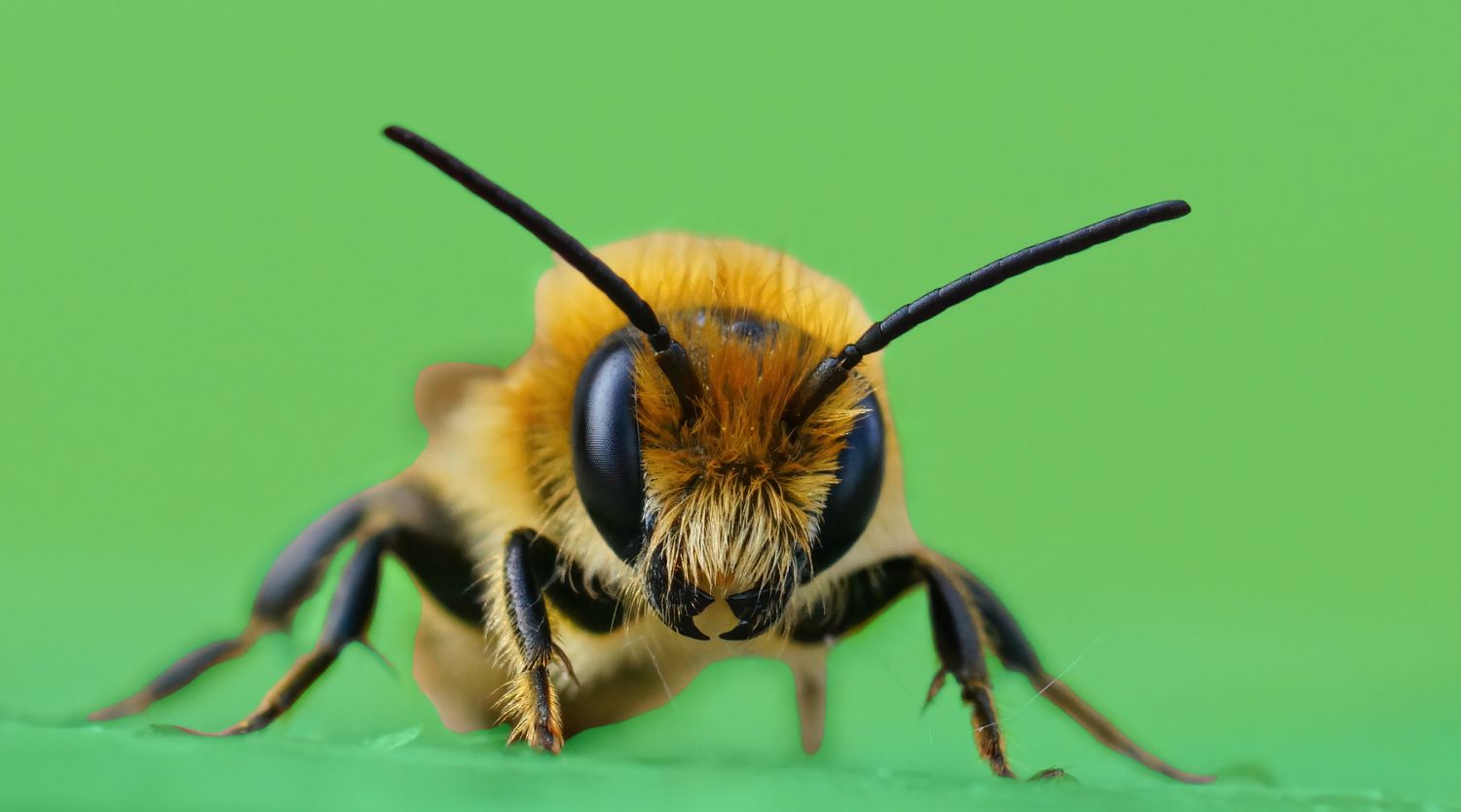
If you’ve spotted bees buzzing in and out of the same spot on your roof, wall, or soffit, there’s a good chance something more than a curious visitor is going on. Bee infestations in Florida are more common than most homeowners realize, and spring is when activity really picks up.
The warm climate across Broward, Miami-Dade, and Palm Beach Counties creates near-perfect conditions for bees to nest, swarm, and multiply, especially when flowering plants hit peak bloom, and foraging bees are at their most active.
Flowers attract bees to the area, supporting their crucial role in pollination but also increasing the likelihood of bee infestations. Here’s what every South Florida homeowner should know.
Why Bee Infestations Are So Common in South Florida
Florida’s subtropical climate keeps South Florida bees active year-round. With pollen and nectar available through much of the year, bee colonies grow quickly, and competition for suitable nesting sites increases as spring arrives.
Bees play a crucial role in pollination, efficiently transferring pollen between flowers and enabling plant fertilization.
Understanding Bee Swarms and Colonies
Bee swarms are a natural behavior where the queen and many worker bees leave the colony to search for a new home. This typically occurs in spring and occasionally in fall. Swarms do not carry honey, wax, larvae, or pupae with them, making them less defensive and generally not a threat to people.
Swarms are typically gentle and tolerant of human presence, while established colonies that have built combs are much more likely to sting as they defend their nests containing immature bees and stored food.
Swarm Season and Nesting Behavior
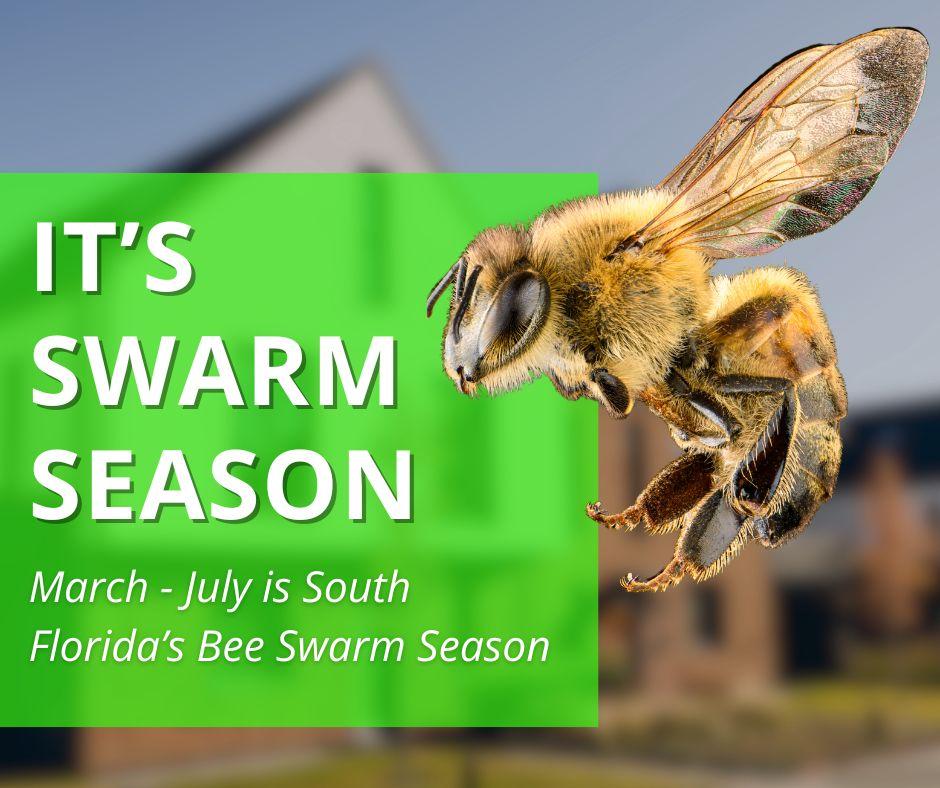
Swarm season runs from March through July, and occasionally into fall. During this time, the queen and many worker bees leave an established colony to search for a new home. Scout bees go ahead to locate a suitable location for the colony to establish itself, and once found, the swarm follows.
Suitable locations can include wall voids, attics, soffit openings, irrigation boxes, or hollow trees. A cluster of bees lasting more than two or three days signals a permanent colony forming rather than a swarm passing through.
Swarms vs. Established Colonies
Not all bee activity carries the same risk. Swarms are typically gentle and tolerant of human presence, while scout bees locate a permanent home. Because swarms do not have honey, wax, larvae, or pupae with them, they are less defensive and generally not a threat to people.
Characteristic | Swarms | Established Colonies |
|---|---|---|
Presence of honey, wax, larvae | None | Present, including combs with larvae and pupae |
Defensiveness | Low; less likely to sting | High; aggressively defend nests and stored food |
Nesting | Temporary clusters while scouting for a home | Permanent nests built within structures (combs) |
Behavior | Gentle, tolerant of humans | Aggressive, especially when disturbed |
Removal difficulty | Easier; the swarm usually leaves in little time | Harder; removal requires eliminating all bees and hive material |
Risk in South Florida | Generally low, but caution is advised | High, especially with Africanized honey bees |
An established colony is a structured community that includes larvae, pupae, honey, and wax. These bees aggressively defend their hive, often nestled within walls or other structures. Feral bees in South Florida are frequently Africanized and can respond far more intensely than expected. The longer a colony remains undisturbed, the harder it becomes to remove.
Additionally, abandoned hives can attract other pests that cause further damage to walls and structures. To prevent re-infestation, it is crucial to remove all bees and hive material during the removal process.
The Most Common Bee Infestations in South Florida Homes
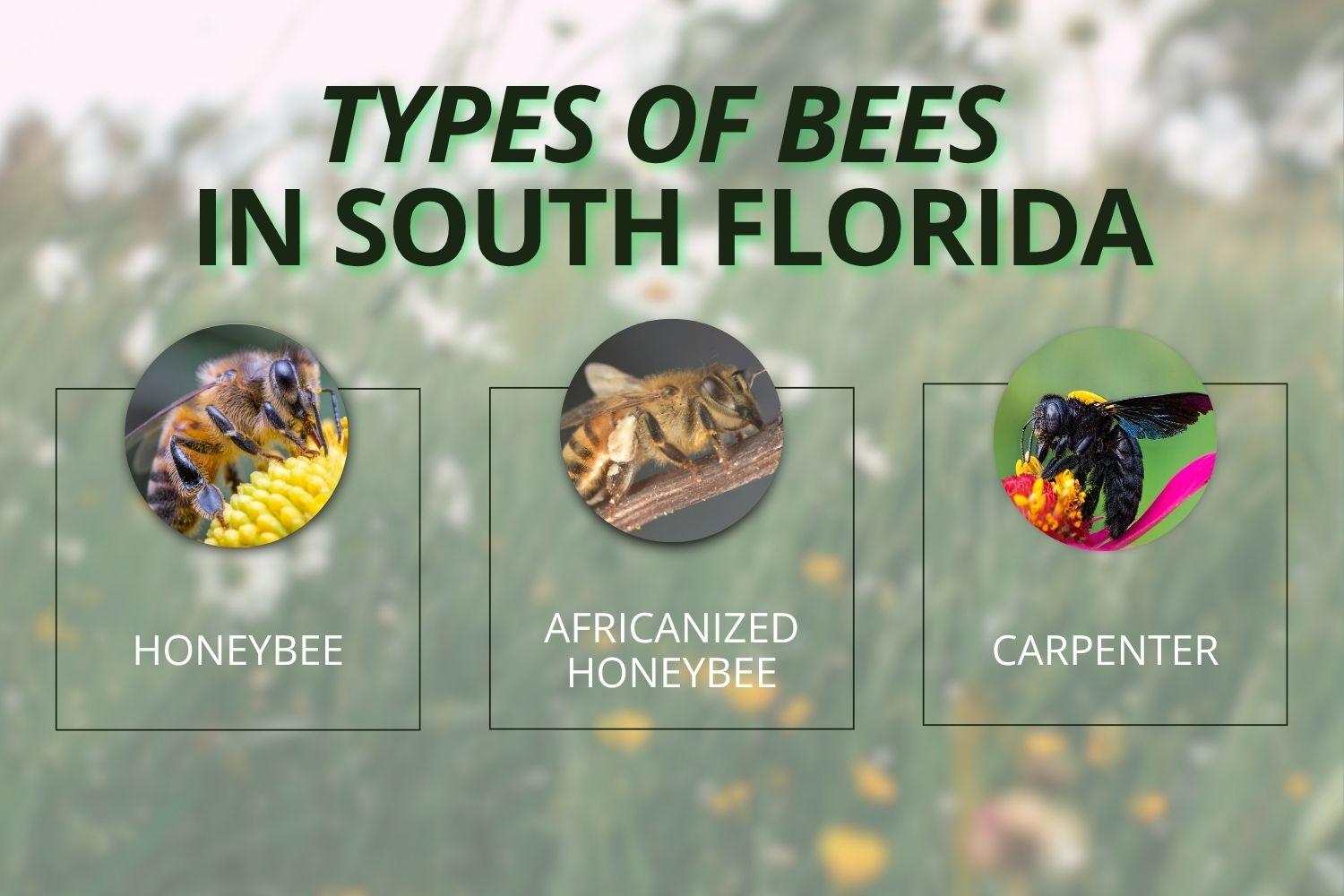
South Florida is home to various bee species that can cause infestations, each with unique nesting habits and risks. Understanding these common types can help homeowners identify and address bee problems effectively.
Honey Bees
Honeybees are the most commonly encountered species across South Florida. These bees often seek shelter in protected areas such as wall voids, attics, chimneys, and tree hollows.
When a honeybee nest takes hold inside your home, it can become a serious problem. A mature colony produces significant honeycomb that causes structural damage, attracts pests like ants and wasps, and creates moisture issues if not fully removed.
After removal, it is crucial to ensure the area is properly sealed to prevent future infestations and keep other bees or pests from accessing the site. Honeybees are legally protected in Florida, and removal must be handled by a licensed pest control company or local beekeeper.
Africanized Honey Bees
Africanized honey bees look nearly identical to European honey bees and cannot be told apart by sight. These bees are highly defensive, respond to disturbances faster and in greater numbers, and will pursue perceived threats much farther than other species.
Feral bees throughout South Florida are frequently Africanized and nest in concealed spots, including irrigation boxes, utility meters, wall cavities, and sheds. A single sting can trigger anaphylaxis in sensitive individuals, making any unidentified hive an urgent situation.
Carpenter Bees
Carpenter bees bore into untreated wood to create nesting tunnels rather than forming colonies. Decks, fences, eaves, and soffits are common targets. Look for round, clean holes in wood surfaces with sawdust-like debris below. Repeated tunneling over time weakens structures and creates entry points for moisture and other insects.
Signs You Have a Bee Infestation
Signs of a bee infestation include increased bee activity around specific locations, buzzing sounds inside walls, visible entry points, and dark stains or residue near potential nesting areas.
Warning Sign | What It Likely Means |
|---|---|
A steady stream of bees entering and exiting a small hole | An established hive is nesting inside |
Buzzing sounds inside walls or ceilings | A hidden colony is growing in a wall cavity |
Increased activity around vents, soffits, or roof edges | Scout bees have found an entry point |
Dark stains or residue near a wall | Honey and wax are seeping through from inside |
Bees near utility boxes or irrigation lines | Possible Africanized hive in a concealed spot |
Round holes bored into wood on decks or eaves | Carpenter bee tunneling activity |
A cluster of bees on a tree or structure for 2 to 3 days | A swarm is transitioning into a permanent colony |
Spring, Allergy Season, and Why the Timing Matters
Spring in South Florida brings peak bee swarming activity and peak airborne allergen levels simultaneously. Allergy season across Broward, Palm Beach, and Miami-Dade Counties runs roughly from February through May. Antihistamines that help with pollen symptoms do not protect against bee venom allergies, which are a separate and potentially far more severe reaction.
For anyone with a known sensitivity, a single sting can trigger anaphylaxis. Any hive on your property should be treated as urgent, not something to monitor and wait on. Additionally, pets should be kept away from areas with bee activity to prevent accidental stings and ensure their safety around bee colonies.
How to Prevent Bee Infestations Around Your Home
Seal entry points. As a key preventive measure, bees can enter through openings as small as one-fourth of an inch. Use expandable foam or caulk around pipes, vents, and utility lines before spring.
Screen your vents. Install 1/8-inch hardware cloth over rain spouts, roof vents, and attic vents to close off potential nesting sites as part of your preventive measures.
Clear clutter and debris. Unused lumber, old appliances, and abandoned structures are suitable nesting sites. Remove them before swarm season to implement effective preventive measures.
Check irrigation boxes and utility meters. High-priority nesting locations for Africanized bees in Broward and Palm Beach Counties. Inspect regularly from March through July as a preventive measure.
Eliminate attractants. Keep trash bins closed, rinse food containers, and remove bird baths or standing water near the home. Consider planting bee-friendly flowers such as daisies and zinnias away from the house to attract bees to safer areas and support pollination.
Try natural repellents. Vinegar and water mixtures or essential oils like peppermint, clove, or cinnamon can deter bees from gathering near entry points. Pesticides should only be used as a last resort and always according to label instructions.
Treat exposed wood. Painting or sealing untreated wood reduces the appeal for carpenter bees.
Clean previous nesting sites. Old honeycomb contains pheromones that draw bees back. Complete removal of all hive material is essential to prevent re-infestation.
Related Questions to Explore
Can a beehive inside my wall cause structural damage to my home? Yes, honey and wax can melt into your wall cavities, destroying standard insulation and rotting drywall. Radix Pest Solutions solves this by removing the mess and replacing it with TAP Insulation, which restores your home's R-value while providing a borate-infused barrier that controls future pests.
How can I tell if the bees on my property are Africanized? You cannot tell if bees on your property are Africanized just by looking at them. Africanized honey bees are nearly identical in appearance to European honey bees, and lab testing is the only definitive confirmation. Any unidentified hive should be assessed by a licensed professional pest control company before any action is taken.
Does Radix offer year-round protection against other stinging insects? While bees are a major spring concern, wasps, yellow jackets, and hornets are active year-round in Miami-Dade and the surrounding areas. Radix offers Integrated Pest Management (IPM) plans that cover a wide variety of stinging insects.
Does Radix Pest Solutions handle bee removal for both homes and businesses? Yes, Radix Pest Solutions handles bee removal for both residential and commercial properties throughout South Florida. Licensed technicians can inspect, identify the species, and safely remove the colony.
Can a beehive in my wall lead to other pest problems? Yes. An abandoned or dying beehive is a buffet for other pests. The fermenting honey and wax attract ants, cockroaches, and wax moths, often leading to a secondary infestation. We inspect your home for the secondary pests that follow, providing a comprehensive shield for your property.
When to Call a Professional Pest Control Company
Any time you discover a hive in or around your home, a professional pest control company should be your first call. DIY removal is not recommended due to the risk of stings, aggressive defensive behavior, and incomplete removal that leads to recurring infestations.
Call right away if bees are entering or exiting your structure, you hear buzzing inside walls, anyone has been stung multiple times, a household member has a known bee sting allergy, or a swarm has not moved within a few hours to a couple of days.
Get Ahead of Bee Season This Spring
Bee infestations in Florida are a genuine safety and property risk across Broward, Miami-Dade, and Palm Beach Counties. Radix Pest Solutions has helped homeowners and businesses throughout Pompano Beach, Fort Lauderdale, Davie, Plantation, Hollywood, and Miami handle bee activity safely and effectively.
If you're seeing signs of bee activity this spring, don't wait. Contact Radix Pest Solutions for a professional inspection today.
If you’ve spotted bees buzzing in and out of the same spot on your roof, wall, or soffit, there’s a good chance something more than a curious visitor is going on. Bee infestations in Florida are more common than most homeowners realize, and spring is when activity really picks up.
The warm climate across Broward, Miami-Dade, and Palm Beach Counties creates near-perfect conditions for bees to nest, swarm, and multiply, especially when flowering plants hit peak bloom, and foraging bees are at their most active.
Flowers attract bees to the area, supporting their crucial role in pollination but also increasing the likelihood of bee infestations. Here’s what every South Florida homeowner should know.
Why Bee Infestations Are So Common in South Florida
Florida’s subtropical climate keeps South Florida bees active year-round. With pollen and nectar available through much of the year, bee colonies grow quickly, and competition for suitable nesting sites increases as spring arrives.
Bees play a crucial role in pollination, efficiently transferring pollen between flowers and enabling plant fertilization.
Understanding Bee Swarms and Colonies
Bee swarms are a natural behavior where the queen and many worker bees leave the colony to search for a new home. This typically occurs in spring and occasionally in fall. Swarms do not carry honey, wax, larvae, or pupae with them, making them less defensive and generally not a threat to people.
Swarms are typically gentle and tolerant of human presence, while established colonies that have built combs are much more likely to sting as they defend their nests containing immature bees and stored food.
Swarm Season and Nesting Behavior
Swarm season runs from March through July, and occasionally into fall. During this time, the queen and many worker bees leave an established colony to search for a new home. Scout bees go ahead to locate a suitable location for the colony to establish itself, and once found, the swarm follows.
Suitable locations can include wall voids, attics, soffit openings, irrigation boxes, or hollow trees. A cluster of bees lasting more than two or three days signals a permanent colony forming rather than a swarm passing through.
Swarms vs. Established Colonies
Not all bee activity carries the same risk. Swarms are typically gentle and tolerant of human presence, while scout bees locate a permanent home. Because swarms do not have honey, wax, larvae, or pupae with them, they are less defensive and generally not a threat to people.
Characteristic | Swarms | Established Colonies |
|---|---|---|
Presence of honey, wax, larvae | None | Present, including combs with larvae and pupae |
Defensiveness | Low; less likely to sting | High; aggressively defend nests and stored food |
Nesting | Temporary clusters while scouting for a home | Permanent nests built within structures (combs) |
Behavior | Gentle, tolerant of humans | Aggressive, especially when disturbed |
Removal difficulty | Easier; the swarm usually leaves in little time | Harder; removal requires eliminating all bees and hive material |
Risk in South Florida | Generally low, but caution is advised | High, especially with Africanized honey bees |
An established colony is a structured community that includes larvae, pupae, honey, and wax. These bees aggressively defend their hive, often nestled within walls or other structures. Feral bees in South Florida are frequently Africanized and can respond far more intensely than expected. The longer a colony remains undisturbed, the harder it becomes to remove.
Additionally, abandoned hives can attract other pests that cause further damage to walls and structures. To prevent re-infestation, it is crucial to remove all bees and hive material during the removal process.
The Most Common Bee Infestations in South Florida Homes
South Florida is home to various bee species that can cause infestations, each with unique nesting habits and risks. Understanding these common types can help homeowners identify and address bee problems effectively.
Honey Bees
Honeybees are the most commonly encountered species across South Florida. These bees often seek shelter in protected areas such as wall voids, attics, chimneys, and tree hollows.
When a honeybee nest takes hold inside your home, it can become a serious problem. A mature colony produces significant honeycomb that causes structural damage, attracts pests like ants and wasps, and creates moisture issues if not fully removed.
After removal, it is crucial to ensure the area is properly sealed to prevent future infestations and keep other bees or pests from accessing the site. Honeybees are legally protected in Florida, and removal must be handled by a licensed pest control company or local beekeeper.
Africanized Honey Bees
Africanized honey bees look nearly identical to European honey bees and cannot be told apart by sight. These bees are highly defensive, respond to disturbances faster and in greater numbers, and will pursue perceived threats much farther than other species.
Feral bees throughout South Florida are frequently Africanized and nest in concealed spots, including irrigation boxes, utility meters, wall cavities, and sheds. A single sting can trigger anaphylaxis in sensitive individuals, making any unidentified hive an urgent situation.
Carpenter Bees
Carpenter bees bore into untreated wood to create nesting tunnels rather than forming colonies. Decks, fences, eaves, and soffits are common targets. Look for round, clean holes in wood surfaces with sawdust-like debris below. Repeated tunneling over time weakens structures and creates entry points for moisture and other insects.
Signs You Have a Bee Infestation
Signs of a bee infestation include increased bee activity around specific locations, buzzing sounds inside walls, visible entry points, and dark stains or residue near potential nesting areas.
Warning Sign | What It Likely Means |
|---|---|
A steady stream of bees entering and exiting a small hole | An established hive is nesting inside |
Buzzing sounds inside walls or ceilings | A hidden colony is growing in a wall cavity |
Increased activity around vents, soffits, or roof edges | Scout bees have found an entry point |
Dark stains or residue near a wall | Honey and wax are seeping through from inside |
Bees near utility boxes or irrigation lines | Possible Africanized hive in a concealed spot |
Round holes bored into wood on decks or eaves | Carpenter bee tunneling activity |
A cluster of bees on a tree or structure for 2 to 3 days | A swarm is transitioning into a permanent colony |
Spring, Allergy Season, and Why the Timing Matters
Spring in South Florida brings peak bee swarming activity and peak airborne allergen levels simultaneously. Allergy season across Broward, Palm Beach, and Miami-Dade Counties runs roughly from February through May. Antihistamines that help with pollen symptoms do not protect against bee venom allergies, which are a separate and potentially far more severe reaction.
For anyone with a known sensitivity, a single sting can trigger anaphylaxis. Any hive on your property should be treated as urgent, not something to monitor and wait on. Additionally, pets should be kept away from areas with bee activity to prevent accidental stings and ensure their safety around bee colonies.
How to Prevent Bee Infestations Around Your Home
Seal entry points. As a key preventive measure, bees can enter through openings as small as one-fourth of an inch. Use expandable foam or caulk around pipes, vents, and utility lines before spring.
Screen your vents. Install 1/8-inch hardware cloth over rain spouts, roof vents, and attic vents to close off potential nesting sites as part of your preventive measures.
Clear clutter and debris. Unused lumber, old appliances, and abandoned structures are suitable nesting sites. Remove them before swarm season to implement effective preventive measures.
Check irrigation boxes and utility meters. High-priority nesting locations for Africanized bees in Broward and Palm Beach Counties. Inspect regularly from March through July as a preventive measure.
Eliminate attractants. Keep trash bins closed, rinse food containers, and remove bird baths or standing water near the home. Consider planting bee-friendly flowers such as daisies and zinnias away from the house to attract bees to safer areas and support pollination.
Try natural repellents. Vinegar and water mixtures or essential oils like peppermint, clove, or cinnamon can deter bees from gathering near entry points. Pesticides should only be used as a last resort and always according to label instructions.
Treat exposed wood. Painting or sealing untreated wood reduces the appeal for carpenter bees.
Clean previous nesting sites. Old honeycomb contains pheromones that draw bees back. Complete removal of all hive material is essential to prevent re-infestation.
Related Questions to Explore
Can a beehive inside my wall cause structural damage to my home? Yes, honey and wax can melt into your wall cavities, destroying standard insulation and rotting drywall. Radix Pest Solutions solves this by removing the mess and replacing it with TAP Insulation, which restores your home's R-value while providing a borate-infused barrier that controls future pests.
How can I tell if the bees on my property are Africanized? You cannot tell if bees on your property are Africanized just by looking at them. Africanized honey bees are nearly identical in appearance to European honey bees, and lab testing is the only definitive confirmation. Any unidentified hive should be assessed by a licensed professional pest control company before any action is taken.
Does Radix offer year-round protection against other stinging insects? While bees are a major spring concern, wasps, yellow jackets, and hornets are active year-round in Miami-Dade and the surrounding areas. Radix offers Integrated Pest Management (IPM) plans that cover a wide variety of stinging insects.
Does Radix Pest Solutions handle bee removal for both homes and businesses? Yes, Radix Pest Solutions handles bee removal for both residential and commercial properties throughout South Florida. Licensed technicians can inspect, identify the species, and safely remove the colony.
Can a beehive in my wall lead to other pest problems? Yes. An abandoned or dying beehive is a buffet for other pests. The fermenting honey and wax attract ants, cockroaches, and wax moths, often leading to a secondary infestation. We inspect your home for the secondary pests that follow, providing a comprehensive shield for your property.
When to Call a Professional Pest Control Company
Any time you discover a hive in or around your home, a professional pest control company should be your first call. DIY removal is not recommended due to the risk of stings, aggressive defensive behavior, and incomplete removal that leads to recurring infestations.
Call right away if bees are entering or exiting your structure, you hear buzzing inside walls, anyone has been stung multiple times, a household member has a known bee sting allergy, or a swarm has not moved within a few hours to a couple of days.
Get Ahead of Bee Season This Spring
Bee infestations in Florida are a genuine safety and property risk across Broward, Miami-Dade, and Palm Beach Counties. Radix Pest Solutions has helped homeowners and businesses throughout Pompano Beach, Fort Lauderdale, Davie, Plantation, Hollywood, and Miami handle bee activity safely and effectively.
If you're seeing signs of bee activity this spring, don't wait. Contact Radix Pest Solutions for a professional inspection today.
Check Out What Our Pest Free Customers Have To Say

Emerald Tower Association, Inc
Pompano Beach, Florida

Highly recommend them. We had issues with raccoons and Jonathan immediately came out and placed cages around the property. Caught several raccoons. Thank you Jonathan for your excellent service.

Darcy Miller
Pompano Beach, Florida
I would definitely recommend Radix Pest Solutions. Jonathan is very professional, reliable and punctual. He absolutely knows this business and takes pride in his work.

Jason Shervinski
Pompano Beach, Florida
We have had Jonathan as our exterminator for well over 7 years. We could not think of a better Pest Control company for all of properties and needs. Jonathan is prompt, detailed, and reasonable. If you are searching for a quality Pest Control Company as a one time or on a recurring basis you found it in Radix!

Emily Acevedo
Pompano Beach, Florida
Jonathan was very professional and knowledgeable, he listened and then proceeded to address the concerns. He provided excellent service and explained the process, completed it quickly and efficiently. I will be using this company again and recommend to anyone with a pest problem.

Killgates Covidlie
Pompano Beach, Florida
I’ve known Jonathan for over five years. On how he took care of us during a complete termite infestation is no less than perfection. There no one like him, bar none. His honesty, reliability, hard work and dedication and punctuality. I feel privileged that I was lucky enough to have found him to use his service, because they don’t exist like him. Thank you Jonathan.
Daisy Maestre
Pompano Beach, Florida
It’s the best pest control company that I’ve dealt with, Jonathan is knowledgeable, always prompt, courteous and thorough and very affordable. I highly recommend him…. Give him a call you won’t regret it… 😊
Emerald Tower Association, Inc
Pompano Beach, Florida
Highly recommend them. We had issues with raccoons and Jonathan immediately came out and placed cages around the property. Caught several raccoons. Thank you Jonathan for your excellent service.
Darcy Miller
Pompano Beach, Florida
I would definitely recommend Radix Pest Solutions. Jonathan is very professional, reliable and punctual. He absolutely knows this business and takes pride in his work.
Jason Shervinski
Pompano Beach, Florida
We have had Jonathan as our exterminator for well over 7 years. We could not think of a better Pest Control company for all of properties and needs. Jonathan is prompt, detailed, and reasonable. If you are searching for a quality Pest Control Company as a one time or on a recurring basis you found it in Radix!
Emily Acevedo
Pompano Beach, Florida
Jonathan was very professional and knowledgeable, he listened and then proceeded to address the concerns. He provided excellent service and explained the process, completed it quickly and efficiently. I will be using this company again and recommend to anyone with a pest problem.
Killgates Covidlie
Pompano Beach, Florida
I’ve known Jonathan for over five years. On how he took care of us during a complete termite infestation is no less than perfection. There no one like him, bar none. His honesty, reliability, hard work and dedication and punctuality. I feel privileged that I was lucky enough to have found him to use his service, because they don’t exist like him. Thank you Jonathan.
Daisy Maestre
Pompano Beach, Florida
It’s the best pest control company that I’ve dealt with, Jonathan is knowledgeable, always prompt, courteous and thorough and very affordable. I highly recommend him…. Give him a call you won’t regret it… 😊
Emerald Tower Association, Inc
Pompano Beach, Florida
Highly recommend them. We had issues with raccoons and Jonathan immediately came out and placed cages around the property. Caught several raccoons. Thank you Jonathan for your excellent service.
Darcy Miller
Pompano Beach, Florida
I would definitely recommend Radix Pest Solutions. Jonathan is very professional, reliable and punctual. He absolutely knows this business and takes pride in his work.
Jason Shervinski
Pompano Beach, Florida
We have had Jonathan as our exterminator for well over 7 years. We could not think of a better Pest Control company for all of properties and needs. Jonathan is prompt, detailed, and reasonable. If you are searching for a quality Pest Control Company as a one time or on a recurring basis you found it in Radix!
Emily Acevedo
Pompano Beach, Florida
Jonathan was very professional and knowledgeable, he listened and then proceeded to address the concerns. He provided excellent service and explained the process, completed it quickly and efficiently. I will be using this company again and recommend to anyone with a pest problem.
Killgates Covidlie
Pompano Beach, Florida
I’ve known Jonathan for over five years. On how he took care of us during a complete termite infestation is no less than perfection. There no one like him, bar none. His honesty, reliability, hard work and dedication and punctuality. I feel privileged that I was lucky enough to have found him to use his service, because they don’t exist like him. Thank you Jonathan.
Daisy Maestre
Pompano Beach, Florida
It’s the best pest control company that I’ve dealt with, Jonathan is knowledgeable, always prompt, courteous and thorough and very affordable. I highly recommend him…. Give him a call you won’t regret it… 😊
Emerald Tower Association, Inc
Pompano Beach, Florida
Highly recommend them. We had issues with raccoons and Jonathan immediately came out and placed cages around the property. Caught several raccoons. Thank you Jonathan for your excellent service.
Darcy Miller
Pompano Beach, Florida
I would definitely recommend Radix Pest Solutions. Jonathan is very professional, reliable and punctual. He absolutely knows this business and takes pride in his work.
Jason Shervinski
Pompano Beach, Florida
We have had Jonathan as our exterminator for well over 7 years. We could not think of a better Pest Control company for all of properties and needs. Jonathan is prompt, detailed, and reasonable. If you are searching for a quality Pest Control Company as a one time or on a recurring basis you found it in Radix!
Emily Acevedo
Pompano Beach, Florida
Jonathan was very professional and knowledgeable, he listened and then proceeded to address the concerns. He provided excellent service and explained the process, completed it quickly and efficiently. I will be using this company again and recommend to anyone with a pest problem.
Killgates Covidlie
Pompano Beach, Florida
I’ve known Jonathan for over five years. On how he took care of us during a complete termite infestation is no less than perfection. There no one like him, bar none. His honesty, reliability, hard work and dedication and punctuality. I feel privileged that I was lucky enough to have found him to use his service, because they don’t exist like him. Thank you Jonathan.
Daisy Maestre
Pompano Beach, Florida
It’s the best pest control company that I’ve dealt with, Jonathan is knowledgeable, always prompt, courteous and thorough and very affordable. I highly recommend him…. Give him a call you won’t regret it… 😊


We offer a range of professional pest control services to residential and commercial clients. Our experienced team is dedicated to keeping your property pest-free with minimal disruption to your daily life.
Phone:
E-mail:
Locations:
1940 NW 1st Ave
Pompano Beach, FL 33060
2131 Hollywood Blvd, Ste 306
Hollywood, FL 33020
2829 SW 67th Ave
Miami, FL 33155
Hours
Monday - Saturday
07:00 am – 05:00 pm
Sun Closed
*Closed All Major Holidays*
Our Services
We offer a range of professional pest control services to residential and commercial clients. Our experienced team is dedicated to keeping your property pest-free with minimal disruption to your daily life.
Phone:
E-mail:
Locations:
1940 NW 1st Ave
Pompano Beach, FL 33060
2131 Hollywood Blvd, Ste 306
Hollywood, FL 33020
2829 SW 67th Ave
Miami, FL 33155
Hours
Monday - Saturday
07:00 am – 05:00 pm
Sun Closed
*Closed All Major Holidays*
Our Services
We offer a range of professional pest control services to residential and commercial clients. Our experienced team is dedicated to keeping your property pest-free with minimal disruption to your daily life.
Phone:
E-mail:
Locations:
1940 NW 1st Ave
Pompano Beach, FL 33060
2131 Hollywood Blvd, Ste 306
Hollywood, FL 33020
2829 SW 67th Ave
Miami, FL 33155
Hours
Monday - Saturday
07:00 am – 05:00 pm
Sun Closed
*Closed All Major Holidays*
Our Services
We offer a range of professional pest control services to residential and commercial clients. Our experienced team is dedicated to keeping your property pest-free with minimal disruption to your daily life.
Phone:
E-mail:
Locations:
1940 NW 1st Ave
Pompano Beach, FL 33060
2131 Hollywood Blvd, Ste 306
Hollywood, FL 33020
2829 SW 67th Ave
Miami, FL 33155
Hours
Monday - Saturday
07:00 am – 05:00 pm
Sun Closed
*Closed All Major Holidays*
Our Services