

$25 OFF SERVICE FOR NEW CUSTOMERS!
(954) 405-9043
Where Do Bees Go in the Winter? What Homeowners Should Know
January 14, 2026
If you live in South Florida, you may have asked yourself, where do bees go in the winter? Even during winter, bees still seem to show up around your home.
You might see them near flowering plants, hovering around rooflines, or appearing on warmer afternoons.
Bees do not fully disappear during winter. In South Florida, they slow down but often stay close by, sheltering in protected spaces around homes, trees, and structures until conditions become warmer again.
Understanding where bees go in the winter helps homeowners tell the difference between normal seasonal behavior and a situation that may need professional attention. It also helps you take steps now that can prevent larger problems later in the year.
Where Do Bees Go in the Winter in South Florida?
In colder regions of the country, winter forces major changes in bee behavior.
Honey bees cluster tightly together inside their hives to generate heat, while many other bee species die off entirely, leaving only queens to survive until spring.
South Florida does not experience those extremes.
Because winter temperatures are generally mild and brief, bees often remain in the same general area year-round.
Instead of migrating or entering true dormancy, they adjust their behavior. Bees seek shelter, reduce activity, and wait out cooler periods until temperatures rise again.
On sunny winter days, bees may leave their shelter to forage or reposition themselves.
This makes it seem like winter never slows them down, even though their overall activity level is much lower than in spring or summer.
For homeowners, this ongoing presence is the main reason the question of where bees go in the winter is so common in South Florida.
Do Bees Hibernate or Stay Active in Warm Climates?
Bees do not hibernate in the traditional sense. Instead, they enter a survival mode that depends heavily on temperature.
In colder climates, extended freezing conditions force bees to remain inside their nests for long periods. In South Florida, winter temperatures fluctuate, allowing bees to remain partially active.
During Winter in Warm Climates, Bees Often:
Stay inside nests during cool mornings and evenings
Become active during warm afternoons
Forage when flowers are available
Shift nesting closer to buildings that retain heat
Different species respond in different ways. Honey bees rely on stored food and cluster behavior. Carpenter bees seek out wood structures. Native bees often shelter in soil, plant stems, or existing cavities.
This flexibility allows bees to survive winter without fully shutting down, which explains why they remain visible around homes throughout the season.
Where Bees Hide Around Homes During Winter
As temperatures cool, bees focus on finding shelter that protects them from wind, moisture, and sudden temperature changes. Residential properties offer many ideal hiding spots.
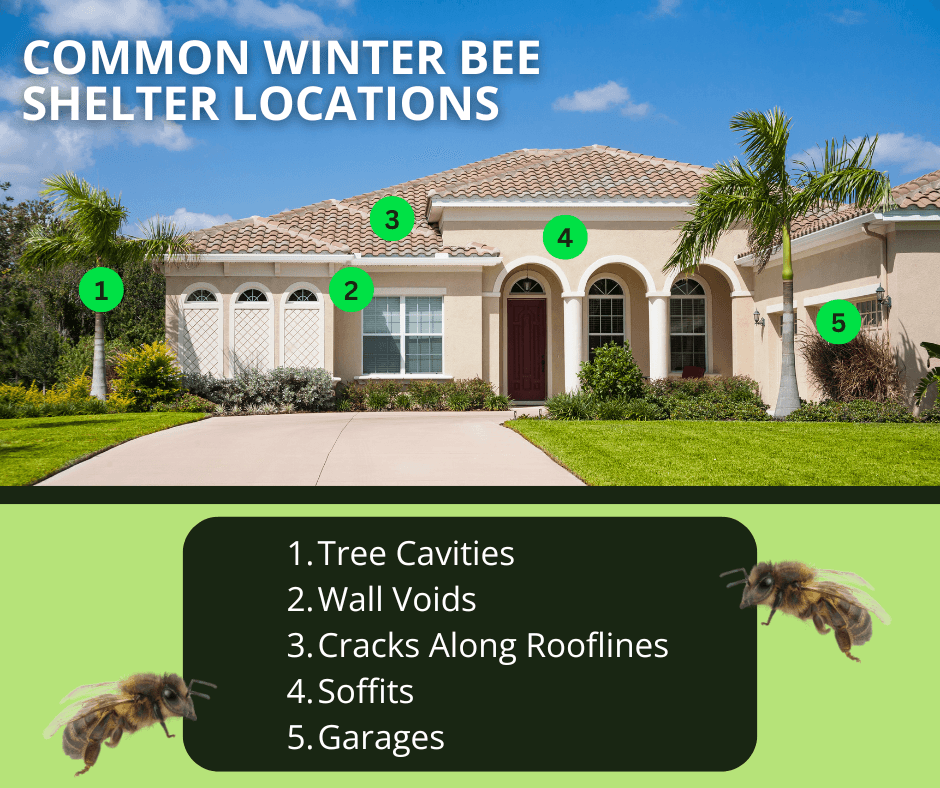
Common Winter Bee Shelter Locations Include:
Wall voids behind siding or stucco
Cracks along rooflines and fascia boards
Soffits, eaves, and attic vents
Detached garages, sheds, and storage buildings
Tree cavities located close to structures
Thick landscaping that blocks wind and rain
Homes often retain heat overnight, especially in attic spaces and wall cavities. Even small gaps can provide enough protection for bees to settle in during the winter months.
In South Florida, newer construction materials and layered building designs can unintentionally create hidden nesting areas that are difficult to detect without a professional inspection.
Difference Between Honey Bees and Wasps in Winter
One of the biggest sources of confusion for homeowners is telling bees and wasps apart. While they may look similar at a glance, their winter behavior and risk levels are very different.
Feature | Honey Bees | Wasps |
Winter survival | The entire colony survives | Most die, queens survive |
Aggression | Generally calm | Often aggressive |
Nest material | Wax comb | Paper-like |
Pollination role | Essential | Minimal |
According to the University of Florida IFAS Extension, honey bees play a critical role in pollination and should be protected whenever possible.
Because of this, professional identification is important before any action is taken.
Wasps, on the other hand, are more likely to pose safety concerns near homes and may require different control methods.
Signs Bees May Be Nesting on Your Property
Winter nesting often goes unnoticed because bee activity is quieter and less frequent. However, small winter nests can turn into large spring colonies if left unchecked.
Common Signs of Winter Bee Nesting Include:
Bees consistently fly to and from one small opening
Activity concentrated around a single wall, roofline, or vent
Low humming or buzzing sounds inside walls or ceilings
Bees appearing indoors near windows, lights, or air vents
Increased activity during warm winter afternoons
Why These Signs Matter
Winter colonies are usually smaller and easier to manage. Once spring arrives, warmer temperatures and increased food availability allow colonies to grow quickly. This can lead to:
More frequent indoor bee sightings
Greater sting risk
Structural damage from carpenter bees
Higher removal complexity
Identifying these signs early gives homeowners more options and reduces the chance of escalation.
Is It Dangerous to Have Bees Nesting Near Your Home?
Not every bee near your home poses a threat. However, nesting location plays a major role in determining risk.
Potential Concerns Include:
Stings, especially for children, pets, or those with allergies
Bees entering living spaces through walls or vents
Long-term damage to wood structures
Colonies are expanding rapidly in the spring
Most winter bee situations are manageable when addressed early. The danger increases when nests go unnoticed, and populations grow larger.
What Homeowners Should Do if They See Bees in Winter
Seeing bees in winter does not always require immediate action, but how you respond matters.
What Homeowners Should Avoid:
Using over-the-counter insecticides
Sealing entry points without an inspection
Disturbing nests or clusters
Attempting removal without training
These actions often force bees deeper into walls or into indoor spaces.
Recommended Steps Instead:
Observe where bees are entering and exiting
Track how often activity occurs
Avoid blocking access points
Contact a professional if the activity persists
Professional assessment helps determine whether bees are simply passing through or establishing a nest.
How Professional Pest Control Handles Bee Situations
Professional pest control services focus on safe, informed, and responsible solutions.
A typical approach includes:
Identifying the bee species
Locating nesting or shelter areas
Evaluating risks to occupants and structure
Recommending monitoring, relocation, or exclusion
Sealing entry points after resolution
In South Florida, winter inspections often reveal early-stage nesting that can be addressed before spring growth begins. This timing allows for safer outcomes for both homeowners and pollinators.
How to Prevent Bee Nesting Before Spring
Winter is one of the best times to focus on prevention. Bee activity is lower, and access points are easier to address.
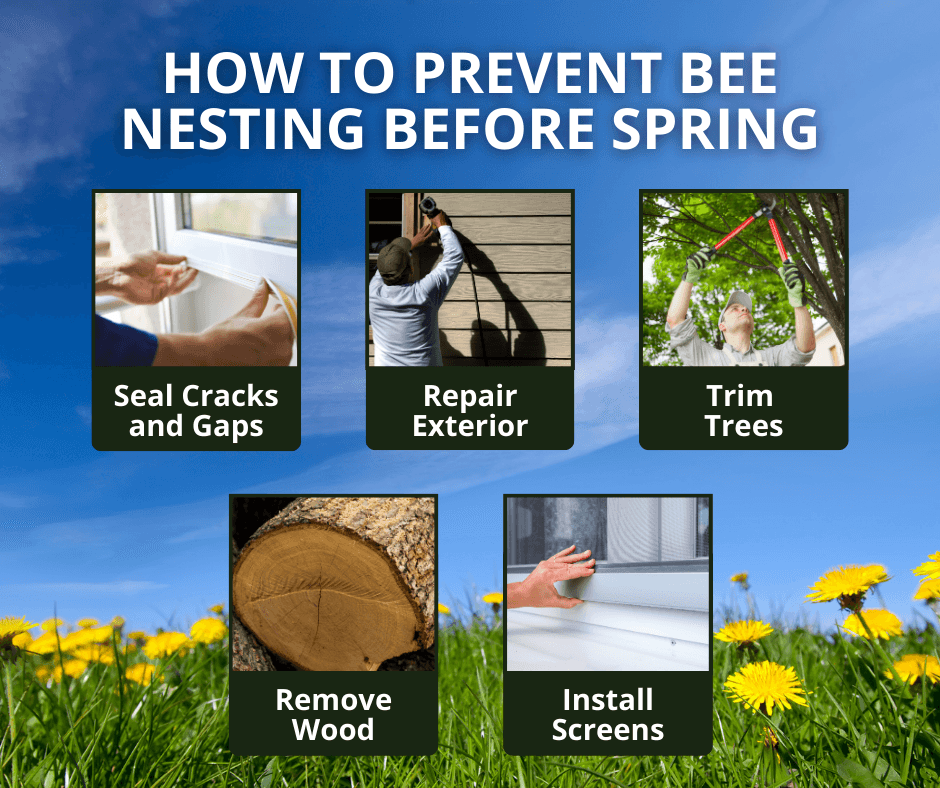
Prevention Steps Homeowners Can Take:
Seal cracks, gaps, and utility penetrations
Repair damaged siding, soffits, and fascia
Install proper vent screens
Trim back trees and shrubs touching the home
Remove untreated or exposed wood
Schedule routine exterior inspections
Why Prevention Matters
Preventive maintenance reduces the chance of bees nesting near living spaces and also helps block other pests such as ants and rodents.
Addressing these issues in winter can prevent larger infestations and costly repairs later in the year.
This proactive approach supports long-term home protection.
Why Bee Activity Is Common Year-Round in South Florida
South Florida’s climate is the main reason bee activity does not fully stop in winter.
According to the Florida Department of Agriculture, mild winters allow many insects to remain active throughout the year.
Extended freezing temperatures, which force dormancy in other regions, are rare in South Florida.
Additional contributing factors include:
Year-round flowering plants
Urban landscaping that provides constant food
Warm building materials that retain heat
Short winter seasons followed by early spring conditions
These factors create an environment where bees can survive, forage, and nest close to homes even during the winter months.
Related Questions
Do bees die in the winter in Florida?
Some bees die naturally, but many survive due to warm temperatures and shelter.
Can bees live inside walls year-round?
Yes. Wall voids provide warmth and protection that allow bee colonies to persist.
Are winter bees more aggressive?
Bees are usually less aggressive in winter, but disturbances can trigger defensive behavior.
When do bees become active again in South Florida?
Pest activity often increases as early as February when temperatures rise.
Should pest control remove bees or relocate them?
This depends on species, location, and risk. Professional evaluation is essential.
Conclusion
If you are noticing repeated bee activity, indoor sightings, or signs of nesting near your home, winter is the right time to take action.
Radix Pest Solutions understands South Florida’s climate, seasonal pest behavior, and responsible bee management practices.
A professional inspection can help determine whether bees are simply passing through or establishing a nest that could grow larger in spring.
If you live in South Florida, you may have asked yourself, where do bees go in the winter? Even during winter, bees still seem to show up around your home.
You might see them near flowering plants, hovering around rooflines, or appearing on warmer afternoons.
Bees do not fully disappear during winter. In South Florida, they slow down but often stay close by, sheltering in protected spaces around homes, trees, and structures until conditions become warmer again.
Understanding where bees go in the winter helps homeowners tell the difference between normal seasonal behavior and a situation that may need professional attention. It also helps you take steps now that can prevent larger problems later in the year.
Where Do Bees Go in the Winter in South Florida?
In colder regions of the country, winter forces major changes in bee behavior.
Honey bees cluster tightly together inside their hives to generate heat, while many other bee species die off entirely, leaving only queens to survive until spring.
South Florida does not experience those extremes.
Because winter temperatures are generally mild and brief, bees often remain in the same general area year-round.
Instead of migrating or entering true dormancy, they adjust their behavior. Bees seek shelter, reduce activity, and wait out cooler periods until temperatures rise again.
On sunny winter days, bees may leave their shelter to forage or reposition themselves.
This makes it seem like winter never slows them down, even though their overall activity level is much lower than in spring or summer.
For homeowners, this ongoing presence is the main reason the question of where bees go in the winter is so common in South Florida.
Do Bees Hibernate or Stay Active in Warm Climates?
Bees do not hibernate in the traditional sense. Instead, they enter a survival mode that depends heavily on temperature.
In colder climates, extended freezing conditions force bees to remain inside their nests for long periods. In South Florida, winter temperatures fluctuate, allowing bees to remain partially active.
During Winter in Warm Climates, Bees Often:
Stay inside nests during cool mornings and evenings
Become active during warm afternoons
Forage when flowers are available
Shift nesting closer to buildings that retain heat
Different species respond in different ways. Honey bees rely on stored food and cluster behavior. Carpenter bees seek out wood structures. Native bees often shelter in soil, plant stems, or existing cavities.
This flexibility allows bees to survive winter without fully shutting down, which explains why they remain visible around homes throughout the season.
Where Bees Hide Around Homes During Winter
As temperatures cool, bees focus on finding shelter that protects them from wind, moisture, and sudden temperature changes. Residential properties offer many ideal hiding spots.
Common Winter Bee Shelter Locations Include:
Wall voids behind siding or stucco
Cracks along rooflines and fascia boards
Soffits, eaves, and attic vents
Detached garages, sheds, and storage buildings
Tree cavities located close to structures
Thick landscaping that blocks wind and rain
Homes often retain heat overnight, especially in attic spaces and wall cavities. Even small gaps can provide enough protection for bees to settle in during the winter months.
In South Florida, newer construction materials and layered building designs can unintentionally create hidden nesting areas that are difficult to detect without a professional inspection.
Difference Between Honey Bees and Wasps in Winter
One of the biggest sources of confusion for homeowners is telling bees and wasps apart. While they may look similar at a glance, their winter behavior and risk levels are very different.
Feature | Honey Bees | Wasps |
Winter survival | The entire colony survives | Most die, queens survive |
Aggression | Generally calm | Often aggressive |
Nest material | Wax comb | Paper-like |
Pollination role | Essential | Minimal |
According to the University of Florida IFAS Extension, honey bees play a critical role in pollination and should be protected whenever possible.
Because of this, professional identification is important before any action is taken.
Wasps, on the other hand, are more likely to pose safety concerns near homes and may require different control methods.
Signs Bees May Be Nesting on Your Property
Winter nesting often goes unnoticed because bee activity is quieter and less frequent. However, small winter nests can turn into large spring colonies if left unchecked.
Common Signs of Winter Bee Nesting Include:
Bees consistently fly to and from one small opening
Activity concentrated around a single wall, roofline, or vent
Low humming or buzzing sounds inside walls or ceilings
Bees appearing indoors near windows, lights, or air vents
Increased activity during warm winter afternoons
Why These Signs Matter
Winter colonies are usually smaller and easier to manage. Once spring arrives, warmer temperatures and increased food availability allow colonies to grow quickly. This can lead to:
More frequent indoor bee sightings
Greater sting risk
Structural damage from carpenter bees
Higher removal complexity
Identifying these signs early gives homeowners more options and reduces the chance of escalation.
Is It Dangerous to Have Bees Nesting Near Your Home?
Not every bee near your home poses a threat. However, nesting location plays a major role in determining risk.
Potential Concerns Include:
Stings, especially for children, pets, or those with allergies
Bees entering living spaces through walls or vents
Long-term damage to wood structures
Colonies are expanding rapidly in the spring
Most winter bee situations are manageable when addressed early. The danger increases when nests go unnoticed, and populations grow larger.
What Homeowners Should Do if They See Bees in Winter
Seeing bees in winter does not always require immediate action, but how you respond matters.
What Homeowners Should Avoid:
Using over-the-counter insecticides
Sealing entry points without an inspection
Disturbing nests or clusters
Attempting removal without training
These actions often force bees deeper into walls or into indoor spaces.
Recommended Steps Instead:
Observe where bees are entering and exiting
Track how often activity occurs
Avoid blocking access points
Contact a professional if the activity persists
Professional assessment helps determine whether bees are simply passing through or establishing a nest.
How Professional Pest Control Handles Bee Situations
Professional pest control services focus on safe, informed, and responsible solutions.
A typical approach includes:
Identifying the bee species
Locating nesting or shelter areas
Evaluating risks to occupants and structure
Recommending monitoring, relocation, or exclusion
Sealing entry points after resolution
In South Florida, winter inspections often reveal early-stage nesting that can be addressed before spring growth begins. This timing allows for safer outcomes for both homeowners and pollinators.
How to Prevent Bee Nesting Before Spring
Winter is one of the best times to focus on prevention. Bee activity is lower, and access points are easier to address.
Prevention Steps Homeowners Can Take:
Seal cracks, gaps, and utility penetrations
Repair damaged siding, soffits, and fascia
Install proper vent screens
Trim back trees and shrubs touching the home
Remove untreated or exposed wood
Schedule routine exterior inspections
Why Prevention Matters
Preventive maintenance reduces the chance of bees nesting near living spaces and also helps block other pests such as ants and rodents.
Addressing these issues in winter can prevent larger infestations and costly repairs later in the year.
This proactive approach supports long-term home protection.
Why Bee Activity Is Common Year-Round in South Florida
South Florida’s climate is the main reason bee activity does not fully stop in winter.
According to the Florida Department of Agriculture, mild winters allow many insects to remain active throughout the year.
Extended freezing temperatures, which force dormancy in other regions, are rare in South Florida.
Additional contributing factors include:
Year-round flowering plants
Urban landscaping that provides constant food
Warm building materials that retain heat
Short winter seasons followed by early spring conditions
These factors create an environment where bees can survive, forage, and nest close to homes even during the winter months.
Related Questions
Do bees die in the winter in Florida?
Some bees die naturally, but many survive due to warm temperatures and shelter.
Can bees live inside walls year-round?
Yes. Wall voids provide warmth and protection that allow bee colonies to persist.
Are winter bees more aggressive?
Bees are usually less aggressive in winter, but disturbances can trigger defensive behavior.
When do bees become active again in South Florida?
Pest activity often increases as early as February when temperatures rise.
Should pest control remove bees or relocate them?
This depends on species, location, and risk. Professional evaluation is essential.
Conclusion
If you are noticing repeated bee activity, indoor sightings, or signs of nesting near your home, winter is the right time to take action.
Radix Pest Solutions understands South Florida’s climate, seasonal pest behavior, and responsible bee management practices.
A professional inspection can help determine whether bees are simply passing through or establishing a nest that could grow larger in spring.
Discover Our Latest Blog Post
Stay informed with the latest tips, insights, and updates from Radix Pest Solutions.


We offer a range of professional pest control services to residential and commercial clients. Our experienced team is dedicated to keeping your property pest-free with minimal disruption to your daily life.
Phone:
E-mail:
Locations:
1940 NW 1st Ave
Pompano Beach, FL 33060
2131 Hollywood Blvd, Ste 306
Hollywood, FL 33020
2829 SW 67th Ave
Miami, FL 33155
Hours
Monday - Saturday
07:00 am – 05:00 pm
Sun Closed
*Closed All Major Holidays*
Our Services
We offer a range of professional pest control services to residential and commercial clients. Our experienced team is dedicated to keeping your property pest-free with minimal disruption to your daily life.
Phone:
E-mail:
Locations:
1940 NW 1st Ave
Pompano Beach, FL 33060
2131 Hollywood Blvd, Ste 306
Hollywood, FL 33020
2829 SW 67th Ave
Miami, FL 33155
Hours
Monday - Saturday
07:00 am – 05:00 pm
Sun Closed
*Closed All Major Holidays*
Our Services
We offer a range of professional pest control services to residential and commercial clients. Our experienced team is dedicated to keeping your property pest-free with minimal disruption to your daily life.
Phone:
E-mail:
Locations:
1940 NW 1st Ave
Pompano Beach, FL 33060
2131 Hollywood Blvd, Ste 306
Hollywood, FL 33020
2829 SW 67th Ave
Miami, FL 33155
Hours
Monday - Saturday
07:00 am – 05:00 pm
Sun Closed
*Closed All Major Holidays*
Our Services
We offer a range of professional pest control services to residential and commercial clients. Our experienced team is dedicated to keeping your property pest-free with minimal disruption to your daily life.
Phone:
E-mail:
Locations:
1940 NW 1st Ave
Pompano Beach, FL 33060
2131 Hollywood Blvd, Ste 306
Hollywood, FL 33020
2829 SW 67th Ave
Miami, FL 33155
Hours
Monday - Saturday
07:00 am – 05:00 pm
Sun Closed
*Closed All Major Holidays*
Our Services