$25 OFF SERVICE FOR NEW CUSTOMERS!
(954) 405-9043

What to Know About Wasps in Florida
May 22, 2026
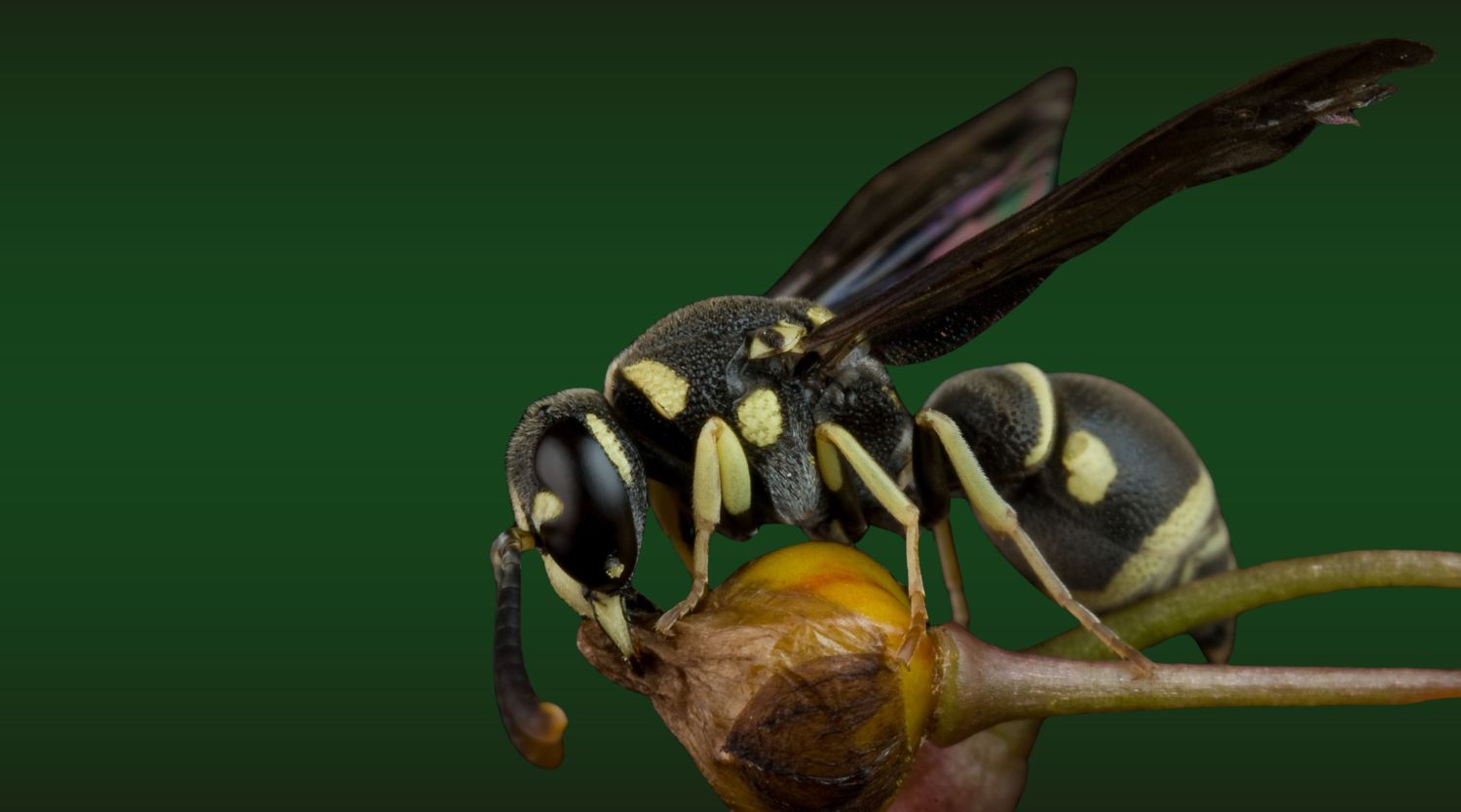
Florida is home to several wasp species, and during peak season (April through October), homeowners across Broward, Miami-Dade, and Palm Beach Counties regularly find nests near eaves, under patios, and in the ground.
Some species are aggressive, others rarely bother anyone, and knowing the difference is the first step toward keeping your family safe.
At Radix Pest Solutions, we help South Florida homeowners identify and manage wasp problems before they become emergencies. This guide covers the most common species, how to spot them, when they're most active, and what you can do to prevent nests from forming.
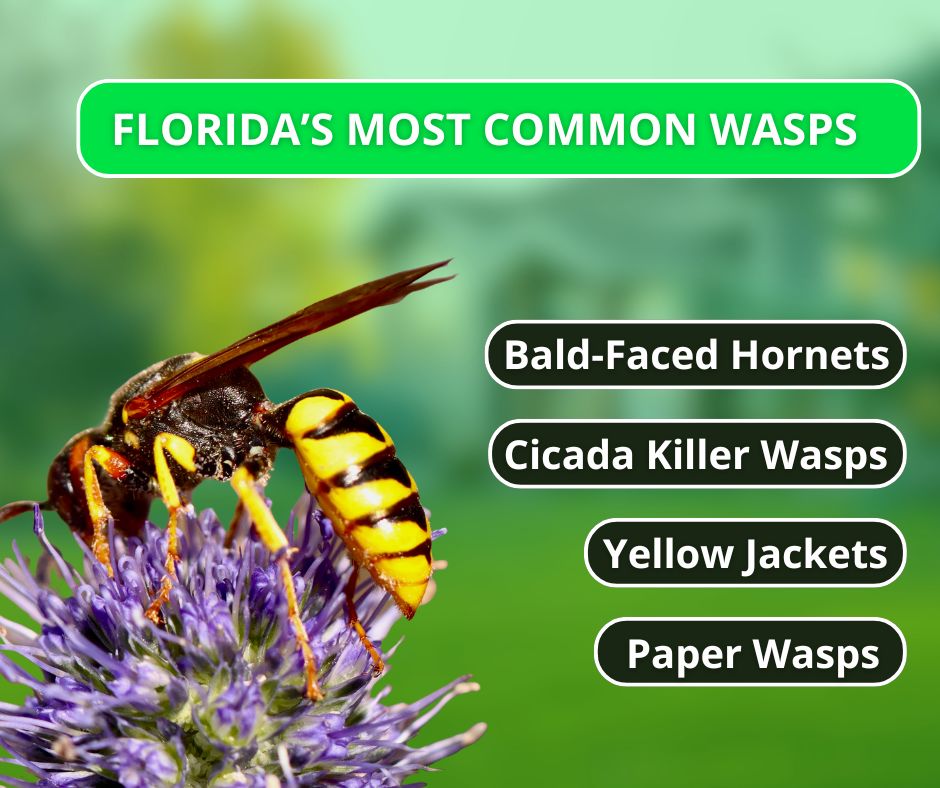
Common Types of Wasps in Florida
Florida's wasp population breaks into two categories: social wasps, which defend a shared colony, and solitary wasps, which operate alone and rarely sting unless physically handled.
Knowing which type you're dealing with shapes every decision you make about removal and treatment.
Paper Wasps
Paper wasps are the most common stinging insect South Florida homeowners encounter. Two species are widespread here: Polistes exclamans (Texas paper wasp) and Polistes carolina (red wasp).
Both build open, umbrella-shaped nests from chewed wood fiber. You'll typically find them under eaves, porch ceilings, mailboxes, and railings.
Paper wasps are semi-aggressive. They won't usually sting unless you disturb their nest, but their nests often appear in high-traffic spots, which makes accidental disturbances common.
Nests are easiest to remove when small and freshly started in early spring, before the colony fills out.
Yellow Jackets
Yellow jackets are the most aggressive wasp species in Florida. They're stockier than paper wasps with more pronounced yellow and black banding, and they nest underground or inside wall voids.
Their entry point is often a small hole in the soil or a gap in the siding, which makes them easy to disturb without realizing it.
They become especially aggressive in late summer and early fall as colonies peak and food resources thin out. A single colony can house several thousand workers.
If you're being stung repeatedly near your yard without obvious provocation, yellow jackets are the most likely culprit.
Mud Daubers
Mud daubers are solitary wasps that build distinctive tube-shaped nests from mud. Common Florida species include the black and yellow mud dauber and the organ-pipe mud dauber.
You'll find their nests on walls, under eaves, inside garages, and on outdoor equipment.
Mud daubers are docile. They rarely sting humans and are considered beneficial because they prey on spiders, including black widows.
If the nest isn't causing a problem, leaving it alone is often the right call.
Cicada Killer Wasps
Cicada killers look intimidating. They're large (up to 1.5 inches), black with yellow markings, and they dig burrows in lawns and garden beds.
Their size causes alarm, but cicada killers are solitary and rarely sting. Males patrol and posture but can't sting. Females can sting if directly handled, but won't mount a group defense.
Most cicada killer activity doesn't require treatment unless the population is large enough to damage lawn areas through tunneling.
Bald-Faced Hornets
Despite the name, bald-faced hornets are actually a type of large wasp related to yellow jackets. They're black with white (not yellow) facial markings.
They build large, football-shaped paper nests high in trees, under roof overhangs, or on utility poles. Colonies can reach 400 to 700 workers by late summer.
Bald-faced hornets are highly aggressive nest defenders. They can sting repeatedly and will chase perceived threats away from the nest.
Professional removal is the safest option for any bald-faced hornet nest near a home or play area.
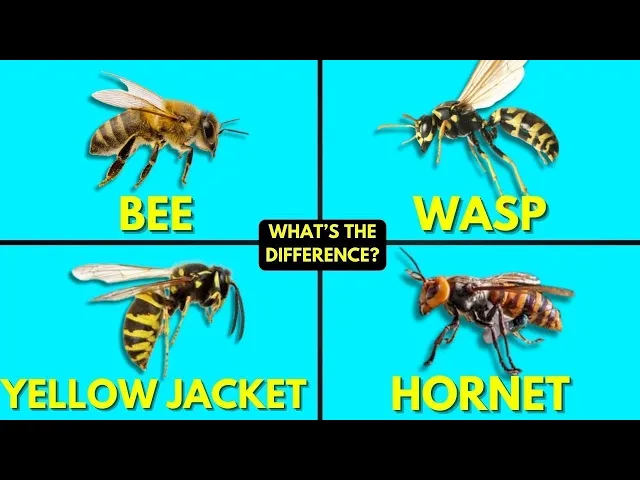
How to Identify a Wasp vs. a Bee
Wasps and bees are often confused, but a few physical cues make identification straightforward.
Feature | Wasp | Bee |
Body shape | Slender, pinched waist | Rounder, more compact |
Body surface | Smooth, shiny | Fuzzy/hairy |
Leg appearance | Dangles in flight | Tucked |
Nest material | Paper (chewed wood) or mud | Wax honeycomb |
Sting behavior | Can sting multiple times | Honeybee stings once (dies after) |
If you've spotted something near your home and aren't sure whether it's a bee or a wasp, our guide to bee infestations in Florida walks through the differences in more detail.
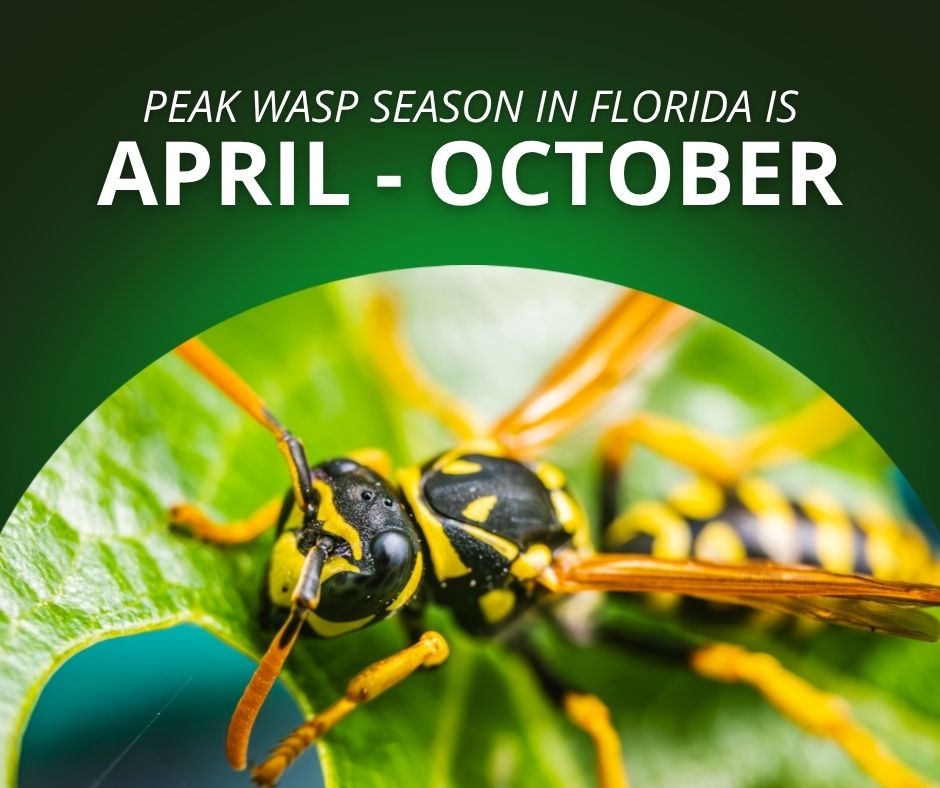
Wasp Season in Florida
Wasp season in Florida runs from April through October, but the risk level shifts throughout that window.
Months | Activity Level | What's Happening |
April to June | Building season | Queens emerge and start nests. Worker populations grow steadily. Nests are small and easiest to remove now. |
July to October | Peak season | Colonies reach maximum size. Foraging intensifies and defensive behavior peaks. Yellow jackets and bald-faced hornets are the most aggressive. |
Low/dormant | Most colonies die off. Some low-level activity can persist in South Florida, but drops off significantly from peak months. |
Because Florida rarely experiences freezes, colony cycles can overlap or extend. Broward, Miami-Dade, and Palm Beach homeowners may see low-level activity in winter that picks up sharply when temperatures climb in spring.
The Centers for Disease Control and Prevention (CDC) notes that stinging insects cause around 60 deaths per year in the U.S., most often due to severe allergic reactions. Wasp stings aren't always a minor inconvenience.
Prevent Wasps from Nesting Around Your Home
The best time to deal with wasps is before they move in. These steps reduce the conditions that attract nesting activity.
Seal entry points. Inspect your home's exterior for gaps in siding, soffits, vents, and roof edges. Yellow jackets in particular exploit small openings to nest inside wall voids.
Remove food attractants. Wasps are drawn to sugary drinks, ripe fruit, and protein sources. Cover trash cans tightly, bring in pet food after feeding, and clean up outdoor cooking areas after use.
Treat eaves and overhangs in early spring. Paper wasps favor sheltered areas just above head height. A quick inspection in March and April lets you remove small starter nests before workers fill them.
Trim overgrown vegetation. Dense shrubs and low-hanging branches provide cover for yellow jacket ground nests and paper wasp nests alike.
Use natural deterrents strategically. Citrus, peppermint, and eucalyptus can discourage wasps from frequenting specific areas. Decoy nests may deter paper wasps, which tend to avoid areas already claimed by another colony.
Keep lawns in good condition. Cicada killers prefer loose, dry, bare soil for burrows. A thick, well-watered lawn makes your yard less attractive.
If you've noticed more stinging insects around your yard this season, our guide to identifying common Florida bugs can help you confirm what you're dealing with before you act.
The National Pest Management Association (NPMA) recommends inspecting your property perimeter twice a year, once in spring and once in early fall, to catch nesting problems early.
Related Questions to Explore
Are wasps dangerous in Florida? Yes, but it depends on the species. If you have a venom allergy, always contact a professional rather than attempting DIY removal.
What attracts wasps to my yard? Wasps are drawn to food sources like sugary drinks and grilled meats, nesting sites such as eaves or ground burrows, and available water sources. Radix can professionally inspect and treat nests that have already formed before populations peak in the summer.
How do I get rid of a wasp nest safely? For yellow jacket nests (underground or in walls) or any large, active colony, call a professional. DIY attempts on established colonies are often ineffective and lead to multiple stings.
Do wasps die in winter in Florida? Activity drops significantly from November through March, though Florida’s mild climate allows some low-level activity to persist. Early spring is the ideal time to inspect for starter nests.
What is the difference between a wasp and a hornet? Hornets are simply a larger, more aggressive type of wasp. Because hornets are more protective of their colonies than standard paper wasps, you should never approach an enclosed paper nest without professional help.
When to Call a Professional
DIY wasp control works in limited situations: a small paper wasp nest in an accessible spot, treated at night before the colony grows. Beyond that, professional removal is the safer call.
Contact a professional when:
The nest is underground or inside a wall void (yellow jackets)
The nest is enclosed and football-shaped (hornets)
The colony is large or heavily active
The nest is near an entryway, play area, or HVAC equipment
Anyone in your household has a known allergy to stings
You've attempted removal, and activity has resumed
At Radix Pest Solutions, we serve homeowners across Broward, Miami-Dade, and Palm Beach Counties. Our residential pest control services include inspection, identification, and targeted treatment for stinging insects, with follow-up to make sure the problem doesn't return.
Call us or contact us online to get started.
Conclusion
Wasps are a normal part of life in South Florida, but that doesn't mean they belong near your front door.
The key takeaways:
Florida's most common species range from mostly harmless (mud daubers, cicada killers) to genuinely aggressive (yellow jackets, bald-faced hornets). Identification changes your response.
Peak season runs April through October, with the highest aggression in late summer and early fall as colony populations peak.
Prevention in early spring (sealing entry points, removing food sources, inspecting eaves) is easier and cheaper than dealing with an established colony.
If you've spotted a nest or noticed increased wasp activity around your home, Radix Pest Solutions is here to help. Explore our residential pest control services or call us today!
Florida is home to several wasp species, and during peak season (April through October), homeowners across Broward, Miami-Dade, and Palm Beach Counties regularly find nests near eaves, under patios, and in the ground.
Some species are aggressive, others rarely bother anyone, and knowing the difference is the first step toward keeping your family safe.
At Radix Pest Solutions, we help South Florida homeowners identify and manage wasp problems before they become emergencies. This guide covers the most common species, how to spot them, when they're most active, and what you can do to prevent nests from forming.
Common Types of Wasps in Florida
Florida's wasp population breaks into two categories: social wasps, which defend a shared colony, and solitary wasps, which operate alone and rarely sting unless physically handled.
Knowing which type you're dealing with shapes every decision you make about removal and treatment.
Paper Wasps
Paper wasps are the most common stinging insect South Florida homeowners encounter. Two species are widespread here: Polistes exclamans (Texas paper wasp) and Polistes carolina (red wasp).
Both build open, umbrella-shaped nests from chewed wood fiber. You'll typically find them under eaves, porch ceilings, mailboxes, and railings.
Paper wasps are semi-aggressive. They won't usually sting unless you disturb their nest, but their nests often appear in high-traffic spots, which makes accidental disturbances common.
Nests are easiest to remove when small and freshly started in early spring, before the colony fills out.
Yellow Jackets
Yellow jackets are the most aggressive wasp species in Florida. They're stockier than paper wasps with more pronounced yellow and black banding, and they nest underground or inside wall voids.
Their entry point is often a small hole in the soil or a gap in the siding, which makes them easy to disturb without realizing it.
They become especially aggressive in late summer and early fall as colonies peak and food resources thin out. A single colony can house several thousand workers.
If you're being stung repeatedly near your yard without obvious provocation, yellow jackets are the most likely culprit.
Mud Daubers
Mud daubers are solitary wasps that build distinctive tube-shaped nests from mud. Common Florida species include the black and yellow mud dauber and the organ-pipe mud dauber.
You'll find their nests on walls, under eaves, inside garages, and on outdoor equipment.
Mud daubers are docile. They rarely sting humans and are considered beneficial because they prey on spiders, including black widows.
If the nest isn't causing a problem, leaving it alone is often the right call.
Cicada Killer Wasps
Cicada killers look intimidating. They're large (up to 1.5 inches), black with yellow markings, and they dig burrows in lawns and garden beds.
Their size causes alarm, but cicada killers are solitary and rarely sting. Males patrol and posture but can't sting. Females can sting if directly handled, but won't mount a group defense.
Most cicada killer activity doesn't require treatment unless the population is large enough to damage lawn areas through tunneling.
Bald-Faced Hornets
Despite the name, bald-faced hornets are actually a type of large wasp related to yellow jackets. They're black with white (not yellow) facial markings.
They build large, football-shaped paper nests high in trees, under roof overhangs, or on utility poles. Colonies can reach 400 to 700 workers by late summer.
Bald-faced hornets are highly aggressive nest defenders. They can sting repeatedly and will chase perceived threats away from the nest.
Professional removal is the safest option for any bald-faced hornet nest near a home or play area.
How to Identify a Wasp vs. a Bee
Wasps and bees are often confused, but a few physical cues make identification straightforward.
Feature | Wasp | Bee |
Body shape | Slender, pinched waist | Rounder, more compact |
Body surface | Smooth, shiny | Fuzzy/hairy |
Leg appearance | Dangles in flight | Tucked |
Nest material | Paper (chewed wood) or mud | Wax honeycomb |
Sting behavior | Can sting multiple times | Honeybee stings once (dies after) |
If you've spotted something near your home and aren't sure whether it's a bee or a wasp, our guide to bee infestations in Florida walks through the differences in more detail.
Wasp Season in Florida
Wasp season in Florida runs from April through October, but the risk level shifts throughout that window.
Months | Activity Level | What's Happening |
April to June | Building season | Queens emerge and start nests. Worker populations grow steadily. Nests are small and easiest to remove now. |
July to October | Peak season | Colonies reach maximum size. Foraging intensifies and defensive behavior peaks. Yellow jackets and bald-faced hornets are the most aggressive. |
Low/dormant | Most colonies die off. Some low-level activity can persist in South Florida, but drops off significantly from peak months. |
Because Florida rarely experiences freezes, colony cycles can overlap or extend. Broward, Miami-Dade, and Palm Beach homeowners may see low-level activity in winter that picks up sharply when temperatures climb in spring.
The Centers for Disease Control and Prevention (CDC) notes that stinging insects cause around 60 deaths per year in the U.S., most often due to severe allergic reactions. Wasp stings aren't always a minor inconvenience.
Prevent Wasps from Nesting Around Your Home
The best time to deal with wasps is before they move in. These steps reduce the conditions that attract nesting activity.
Seal entry points. Inspect your home's exterior for gaps in siding, soffits, vents, and roof edges. Yellow jackets in particular exploit small openings to nest inside wall voids.
Remove food attractants. Wasps are drawn to sugary drinks, ripe fruit, and protein sources. Cover trash cans tightly, bring in pet food after feeding, and clean up outdoor cooking areas after use.
Treat eaves and overhangs in early spring. Paper wasps favor sheltered areas just above head height. A quick inspection in March and April lets you remove small starter nests before workers fill them.
Trim overgrown vegetation. Dense shrubs and low-hanging branches provide cover for yellow jacket ground nests and paper wasp nests alike.
Use natural deterrents strategically. Citrus, peppermint, and eucalyptus can discourage wasps from frequenting specific areas. Decoy nests may deter paper wasps, which tend to avoid areas already claimed by another colony.
Keep lawns in good condition. Cicada killers prefer loose, dry, bare soil for burrows. A thick, well-watered lawn makes your yard less attractive.
If you've noticed more stinging insects around your yard this season, our guide to identifying common Florida bugs can help you confirm what you're dealing with before you act.
The National Pest Management Association (NPMA) recommends inspecting your property perimeter twice a year, once in spring and once in early fall, to catch nesting problems early.
Related Questions to Explore
Are wasps dangerous in Florida? Yes, but it depends on the species. If you have a venom allergy, always contact a professional rather than attempting DIY removal.
What attracts wasps to my yard? Wasps are drawn to food sources like sugary drinks and grilled meats, nesting sites such as eaves or ground burrows, and available water sources. Radix can professionally inspect and treat nests that have already formed before populations peak in the summer.
How do I get rid of a wasp nest safely? For yellow jacket nests (underground or in walls) or any large, active colony, call a professional. DIY attempts on established colonies are often ineffective and lead to multiple stings.
Do wasps die in winter in Florida? Activity drops significantly from November through March, though Florida’s mild climate allows some low-level activity to persist. Early spring is the ideal time to inspect for starter nests.
What is the difference between a wasp and a hornet? Hornets are simply a larger, more aggressive type of wasp. Because hornets are more protective of their colonies than standard paper wasps, you should never approach an enclosed paper nest without professional help.
When to Call a Professional
DIY wasp control works in limited situations: a small paper wasp nest in an accessible spot, treated at night before the colony grows. Beyond that, professional removal is the safer call.
Contact a professional when:
The nest is underground or inside a wall void (yellow jackets)
The nest is enclosed and football-shaped (hornets)
The colony is large or heavily active
The nest is near an entryway, play area, or HVAC equipment
Anyone in your household has a known allergy to stings
You've attempted removal, and activity has resumed
At Radix Pest Solutions, we serve homeowners across Broward, Miami-Dade, and Palm Beach Counties. Our residential pest control services include inspection, identification, and targeted treatment for stinging insects, with follow-up to make sure the problem doesn't return.
Call us or contact us online to get started.
Conclusion
Wasps are a normal part of life in South Florida, but that doesn't mean they belong near your front door.
The key takeaways:
Florida's most common species range from mostly harmless (mud daubers, cicada killers) to genuinely aggressive (yellow jackets, bald-faced hornets). Identification changes your response.
Peak season runs April through October, with the highest aggression in late summer and early fall as colony populations peak.
Prevention in early spring (sealing entry points, removing food sources, inspecting eaves) is easier and cheaper than dealing with an established colony.
If you've spotted a nest or noticed increased wasp activity around your home, Radix Pest Solutions is here to help. Explore our residential pest control services or call us today!
Check Out What Our Pest Free Customers Have To Say

Emerald Tower Association, Inc
Pompano Beach, Florida

Highly recommend them. We had issues with raccoons and Jonathan immediately came out and placed cages around the property. Caught several raccoons. Thank you Jonathan for your excellent service.

Darcy Miller
Pompano Beach, Florida
I would definitely recommend Radix Pest Solutions. Jonathan is very professional, reliable and punctual. He absolutely knows this business and takes pride in his work.

Jason Shervinski
Pompano Beach, Florida
We have had Jonathan as our exterminator for well over 7 years. We could not think of a better Pest Control company for all of properties and needs. Jonathan is prompt, detailed, and reasonable. If you are searching for a quality Pest Control Company as a one time or on a recurring basis you found it in Radix!

Emily Acevedo
Pompano Beach, Florida
Jonathan was very professional and knowledgeable, he listened and then proceeded to address the concerns. He provided excellent service and explained the process, completed it quickly and efficiently. I will be using this company again and recommend to anyone with a pest problem.

Killgates Covidlie
Pompano Beach, Florida
I’ve known Jonathan for over five years. On how he took care of us during a complete termite infestation is no less than perfection. There no one like him, bar none. His honesty, reliability, hard work and dedication and punctuality. I feel privileged that I was lucky enough to have found him to use his service, because they don’t exist like him. Thank you Jonathan.
Daisy Maestre
Pompano Beach, Florida
It’s the best pest control company that I’ve dealt with, Jonathan is knowledgeable, always prompt, courteous and thorough and very affordable. I highly recommend him…. Give him a call you won’t regret it… 😊
Emerald Tower Association, Inc
Pompano Beach, Florida
Highly recommend them. We had issues with raccoons and Jonathan immediately came out and placed cages around the property. Caught several raccoons. Thank you Jonathan for your excellent service.
Darcy Miller
Pompano Beach, Florida
I would definitely recommend Radix Pest Solutions. Jonathan is very professional, reliable and punctual. He absolutely knows this business and takes pride in his work.
Jason Shervinski
Pompano Beach, Florida
We have had Jonathan as our exterminator for well over 7 years. We could not think of a better Pest Control company for all of properties and needs. Jonathan is prompt, detailed, and reasonable. If you are searching for a quality Pest Control Company as a one time or on a recurring basis you found it in Radix!
Emily Acevedo
Pompano Beach, Florida
Jonathan was very professional and knowledgeable, he listened and then proceeded to address the concerns. He provided excellent service and explained the process, completed it quickly and efficiently. I will be using this company again and recommend to anyone with a pest problem.
Killgates Covidlie
Pompano Beach, Florida
I’ve known Jonathan for over five years. On how he took care of us during a complete termite infestation is no less than perfection. There no one like him, bar none. His honesty, reliability, hard work and dedication and punctuality. I feel privileged that I was lucky enough to have found him to use his service, because they don’t exist like him. Thank you Jonathan.
Daisy Maestre
Pompano Beach, Florida
It’s the best pest control company that I’ve dealt with, Jonathan is knowledgeable, always prompt, courteous and thorough and very affordable. I highly recommend him…. Give him a call you won’t regret it… 😊
Emerald Tower Association, Inc
Pompano Beach, Florida
Highly recommend them. We had issues with raccoons and Jonathan immediately came out and placed cages around the property. Caught several raccoons. Thank you Jonathan for your excellent service.
Darcy Miller
Pompano Beach, Florida
I would definitely recommend Radix Pest Solutions. Jonathan is very professional, reliable and punctual. He absolutely knows this business and takes pride in his work.
Jason Shervinski
Pompano Beach, Florida
We have had Jonathan as our exterminator for well over 7 years. We could not think of a better Pest Control company for all of properties and needs. Jonathan is prompt, detailed, and reasonable. If you are searching for a quality Pest Control Company as a one time or on a recurring basis you found it in Radix!
Emily Acevedo
Pompano Beach, Florida
Jonathan was very professional and knowledgeable, he listened and then proceeded to address the concerns. He provided excellent service and explained the process, completed it quickly and efficiently. I will be using this company again and recommend to anyone with a pest problem.
Killgates Covidlie
Pompano Beach, Florida
I’ve known Jonathan for over five years. On how he took care of us during a complete termite infestation is no less than perfection. There no one like him, bar none. His honesty, reliability, hard work and dedication and punctuality. I feel privileged that I was lucky enough to have found him to use his service, because they don’t exist like him. Thank you Jonathan.
Daisy Maestre
Pompano Beach, Florida
It’s the best pest control company that I’ve dealt with, Jonathan is knowledgeable, always prompt, courteous and thorough and very affordable. I highly recommend him…. Give him a call you won’t regret it… 😊
Emerald Tower Association, Inc
Pompano Beach, Florida
Highly recommend them. We had issues with raccoons and Jonathan immediately came out and placed cages around the property. Caught several raccoons. Thank you Jonathan for your excellent service.
Darcy Miller
Pompano Beach, Florida
I would definitely recommend Radix Pest Solutions. Jonathan is very professional, reliable and punctual. He absolutely knows this business and takes pride in his work.
Jason Shervinski
Pompano Beach, Florida
We have had Jonathan as our exterminator for well over 7 years. We could not think of a better Pest Control company for all of properties and needs. Jonathan is prompt, detailed, and reasonable. If you are searching for a quality Pest Control Company as a one time or on a recurring basis you found it in Radix!
Emily Acevedo
Pompano Beach, Florida
Jonathan was very professional and knowledgeable, he listened and then proceeded to address the concerns. He provided excellent service and explained the process, completed it quickly and efficiently. I will be using this company again and recommend to anyone with a pest problem.
Killgates Covidlie
Pompano Beach, Florida
I’ve known Jonathan for over five years. On how he took care of us during a complete termite infestation is no less than perfection. There no one like him, bar none. His honesty, reliability, hard work and dedication and punctuality. I feel privileged that I was lucky enough to have found him to use his service, because they don’t exist like him. Thank you Jonathan.
Daisy Maestre
Pompano Beach, Florida
It’s the best pest control company that I’ve dealt with, Jonathan is knowledgeable, always prompt, courteous and thorough and very affordable. I highly recommend him…. Give him a call you won’t regret it… 😊


We offer a range of professional pest control services to residential and commercial clients. Our experienced team is dedicated to keeping your property pest-free with minimal disruption to your daily life.
Phone:
E-mail:
Locations:
1940 NW 1st Ave
Pompano Beach, FL 33060
2131 Hollywood Blvd, Ste 306
Hollywood, FL 33020
2829 SW 67th Ave
Miami, FL 33155
Hours
Monday - Saturday
07:00 am – 05:00 pm
Sun Closed
*Closed All Major Holidays*
Our Services
We offer a range of professional pest control services to residential and commercial clients. Our experienced team is dedicated to keeping your property pest-free with minimal disruption to your daily life.
Phone:
E-mail:
Locations:
1940 NW 1st Ave
Pompano Beach, FL 33060
2131 Hollywood Blvd, Ste 306
Hollywood, FL 33020
2829 SW 67th Ave
Miami, FL 33155
Hours
Monday - Saturday
07:00 am – 05:00 pm
Sun Closed
*Closed All Major Holidays*
Our Services
We offer a range of professional pest control services to residential and commercial clients. Our experienced team is dedicated to keeping your property pest-free with minimal disruption to your daily life.
Phone:
E-mail:
Locations:
1940 NW 1st Ave
Pompano Beach, FL 33060
2131 Hollywood Blvd, Ste 306
Hollywood, FL 33020
2829 SW 67th Ave
Miami, FL 33155
Hours
Monday - Saturday
07:00 am – 05:00 pm
Sun Closed
*Closed All Major Holidays*
Our Services
We offer a range of professional pest control services to residential and commercial clients. Our experienced team is dedicated to keeping your property pest-free with minimal disruption to your daily life.
Phone:
E-mail:
Locations:
1940 NW 1st Ave
Pompano Beach, FL 33060
2131 Hollywood Blvd, Ste 306
Hollywood, FL 33020
2829 SW 67th Ave
Miami, FL 33155
Hours
Monday - Saturday
07:00 am – 05:00 pm
Sun Closed
*Closed All Major Holidays*
Our Services